AI Agents for Business: Cut Operational Costs by 40% with Intelligent Automation
Smart businesses are leveraging AI agents to slash operational costs while boosting efficiency. Learn how intelligent automation can transform your bottom line and streamline operations across departments.
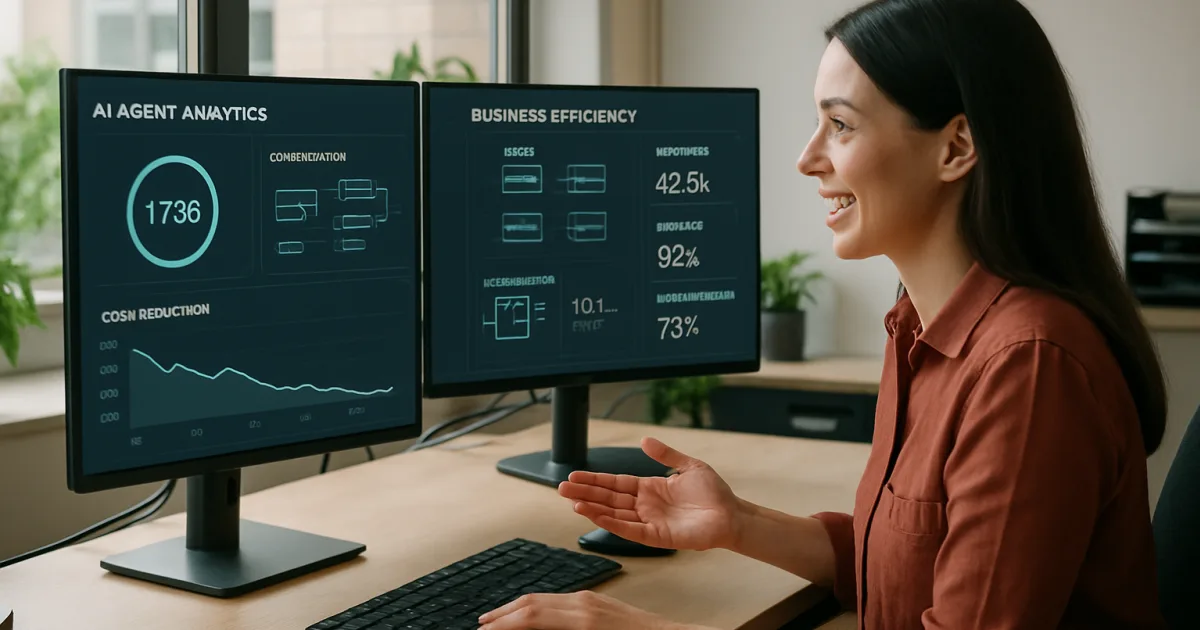
Small businesses today face unprecedented pressure to automate operations while competing with larger enterprises that have dedicated IT teams and unlimited budgets. The rise of autonomous technology offers a game-changing opportunity for small business owners to level the playing field through intelligent automation that works around the clock.
Understanding Autonomous Technology for Small Business
Autonomous technology refers to systems that can operate independently with minimal human intervention, using artificial intelligence to make decisions and execute tasks. For small businesses, this means automating repetitive processes like customer service, inventory management, scheduling, and data analysis without hiring additional staff. These systems learn from your business patterns and continuously improve their performance, becoming more valuable over time.
Unlike traditional automation that follows rigid rules, autonomous systems adapt to changing conditions and handle exceptions intelligently. They can process customer inquiries at 3 AM, reorder inventory when stock runs low, or reschedule appointments when conflicts arise. This flexibility makes them ideal for small businesses that need maximum efficiency with limited resources.
Key Benefits of Implementing Autonomous Systems
The primary advantage of autonomous technology is its ability to reduce operational costs while improving service quality. Small businesses typically see a 30-40% reduction in routine task completion time, allowing owners and employees to focus on strategic growth activities. According to McKinsey research, businesses that implement intelligent automation see average productivity gains of 15-20% within the first year.
Customer satisfaction also improves dramatically when autonomous systems handle routine interactions consistently and accurately. These systems never have bad days, forget important details, or provide inconsistent information to different customers. They maintain your brand standards 24/7 and escalate complex issues to human team members when necessary, ensuring every customer receives appropriate attention.
Common Applications Across Industries
Retail businesses use autonomous technology for inventory tracking, customer support chatbots, and personalized product recommendations that increase average order values. Service companies implement autonomous scheduling systems that optimize technician routes and automatically handle appointment confirmations and reminders. Professional services firms deploy intelligent document processing to extract key information from contracts, invoices, and client communications.
Manufacturing and distribution businesses benefit from autonomous quality control systems that detect defects faster than human inspectors and predictive maintenance tools that prevent costly equipment failures. Even traditional brick-and-mortar businesses like restaurants use autonomous systems for order taking, kitchen management, and customer feedback analysis to improve operations continuously.
Overcoming Implementation Challenges
Many small business owners worry that autonomous technology is too complex or expensive for their operations, but modern solutions are designed with simplicity in mind. The key is starting with one specific process rather than attempting to automate everything at once. Our automation solutions are specifically tailored to help small businesses identify the highest-impact opportunities for their unique situation.
Training concerns often prevent business owners from moving forward, but today's autonomous systems require minimal technical expertise to operate. Most platforms offer intuitive interfaces that feel similar to popular business apps you already use. The learning curve is typically measured in days rather than months, and support teams help ensure smooth transitions from manual to automated processes.
Measuring Success and ROI
Successful autonomous technology implementation begins with establishing clear metrics before deployment. Track time savings, error reduction rates, customer response times, and cost per transaction to quantify the impact on your business. Most small businesses see positive ROI within 3-6 months, with benefits accelerating as systems learn and optimize over time.
Regular performance reviews help identify additional automation opportunities and ensure systems continue meeting business needs as you grow. Forrester studies show that businesses with ongoing optimization programs achieve 2-3 times better results than those that implement once and forget. Our success stories demonstrate how systematic approaches to autonomous technology deliver compound benefits over time.
Choosing the Right Technology Partner
Selecting an autonomous technology provider requires careful evaluation of their experience with businesses similar to yours, ongoing support quality, and scalability of their solutions. Look for partners who offer comprehensive training, clear documentation, and responsive technical support when issues arise. The cheapest option rarely provides the best long-term value when factoring in implementation time and ongoing maintenance needs.
Consider providers who understand your industry's specific challenges and regulatory requirements, as this expertise dramatically reduces implementation complexity. The best partners act as consultants who help identify optimization opportunities rather than simply selling software licenses. Understanding AI implementation processes helps you ask better questions and make more informed decisions about potential technology partnerships.
Future-Proofing Your Business
Autonomous technology adoption positions small businesses to compete effectively as market dynamics continue evolving rapidly. Early adopters gain competitive advantages that become harder for competitors to match over time, as autonomous systems accumulate valuable data and operational insights. Harvard Business Review research indicates that businesses implementing AI-driven automation early achieve market share gains that persist long-term.
The technology landscape will continue advancing, but businesses with autonomous foundations can adapt new capabilities more easily than those starting from manual processes. This scalability ensures your investment grows with your business rather than becoming obsolete as requirements change. Strategic planning for autonomous technology adoption helps ensure sustainable growth and operational resilience.
Frequently Asked Questions
How much does autonomous technology cost for a small business?
Costs vary significantly based on the complexity of processes you want to automate and the size of your operation. Most small businesses start with solutions ranging from $200-2000 per month, with many seeing positive ROI within 90 days. Check our pricing information to understand investment options that align with your budget and business goals.
Will autonomous technology replace my employees?
Autonomous technology is designed to handle repetitive, time-consuming tasks so your employees can focus on higher-value activities that require human creativity and judgment. Most small businesses find that automation allows them to serve more customers with existing staff rather than reducing headcount. The technology augments human capabilities rather than replacing people entirely.
How long does it take to implement autonomous systems?
Implementation timelines depend on the complexity of your processes and the level of customization required. Simple automation projects like chatbots or appointment scheduling can be deployed within 2-4 weeks, while comprehensive workflow automation may take 2-3 months. Most businesses begin seeing benefits within the first month of deployment.
What if the autonomous system makes mistakes or breaks down?
Modern autonomous systems include built-in safeguards and escalation procedures to handle exceptions and errors gracefully. They're designed with fallback mechanisms that alert human operators when situations require intervention. Quality technology partners provide 24/7 monitoring and support to minimize downtime and ensure consistent performance.
Do I need technical expertise to manage autonomous technology?
Today's autonomous technology platforms are designed for business users rather than technical experts. Most systems offer intuitive dashboards and simple configuration tools that feel similar to other business software you already use. Comprehensive training and ongoing support ensure you can manage systems effectively without deep technical knowledge.
How do I know which processes to automate first?
The best candidates for automation are repetitive tasks that consume significant time, have clear rules or patterns, and don't require complex decision-making. Common starting points include customer inquiry responses, appointment scheduling, invoice processing, and inventory tracking. Professional consultation helps identify the highest-impact opportunities specific to your business.
Can autonomous technology integrate with my existing business software?
Most modern autonomous technology solutions are designed to integrate seamlessly with popular business applications like CRM systems, accounting software, and e-commerce platforms. Integration capabilities eliminate the need to replace existing tools and ensure data flows smoothly between all your business systems. Learn more about our integration expertise and approach to working with existing technology stacks.
Getting Started
Implementing autonomous technology doesn't have to be overwhelming when you have the right partner guiding your journey. Start by identifying one key process that consumes significant time or creates bottlenecks in your daily operations, then explore how intelligent automation can transform that area of your business. Our team specializes in helping small businesses navigate the autonomous technology landscape and implement solutions that deliver measurable results. Schedule a consultation today to discover how autonomous technology can unlock your business potential and position you for sustainable growth in an increasingly competitive marketplace.
Brandon Hufstetler
Principal and CEO of Autonomous Retail Technology
Brandon Hufstetler is an AI strategist and executive dedicated to helping businesses connect technology, data, and strategy to achieve real growth in the modern business era. As the Principal and CEO of Autonomous Retail Technology, he leads initiatives that use AI to streamline operations, enhance decision-making, and scale business impact. With nearly 25 years of experience spanning startups, scaling ventures, and large enterprises, Brandon has built a reputation for bridging the gap between innovation and execution. His approach blends business acumen with deep technical insight, enabling organizations to embrace AI in ways that are both responsible and transformative. Before founding Autonomous Retail Technology, Brandon spent more than a decade in senior leadership roles overseeing digital transformation, business development, and enterprise analytics. He is passionate about empowering leaders to navigate the evolving AI landscape with confidence, creativity, and measurable outcomes.
Ready to Automate Your Business?
Let's discuss how automation can transform your operations.
Book a Free Consultation