How AI Agents for Business Are Revolutionizing Time Management in 2025
Modern businesses are drowning in repetitive tasks that consume valuable time. AI agents for business offer a powerful solution, automating routine processes and freeing up teams to focus on strategic initiatives. Learn how companies are saving 40+ hours weekly with intelligent automation.
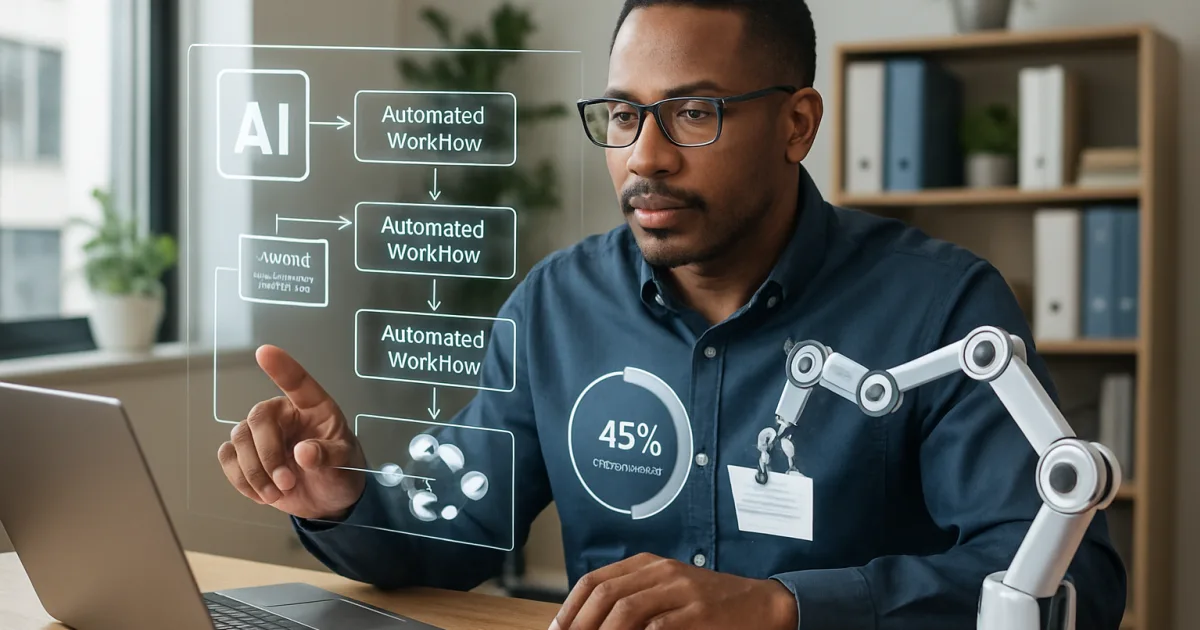
Small businesses today face an unprecedented opportunity to leverage artificial intelligence and automation to streamline operations, reduce costs, and accelerate growth. Understanding how autonomous technology can transform your business operations is no longer optional—it's essential for staying competitive in an increasingly digital marketplace.
Understanding Autonomous Technology for Small Businesses
Autonomous technology refers to systems that can perform tasks and make decisions with minimal human intervention, using artificial intelligence, machine learning, and advanced algorithms. For small businesses, this technology represents a game-changing opportunity to automate repetitive tasks, improve accuracy, and free up valuable time for strategic activities. Unlike large enterprise solutions that require massive IT infrastructure, modern autonomous technology solutions are designed to be accessible, affordable, and easy to implement for businesses of all sizes.
The most impactful applications for small businesses include customer service automation, inventory management, financial processing, and marketing campaign optimization. These technologies work by analyzing patterns in your business data, learning from historical performance, and making intelligent recommendations or taking automated actions. By implementing the right automation solutions, small businesses can achieve operational efficiency that was previously only available to large corporations with extensive resources.
Key Benefits of Implementing Autonomous Systems
The primary advantage of autonomous technology lies in its ability to dramatically reduce operational costs while improving service quality and consistency. Small businesses typically see cost reductions of 20-40% in areas where automation is implemented, according to recent studies by McKinsey. This cost savings comes from reduced labor requirements for routine tasks, fewer errors in data processing, and improved resource allocation. Additionally, autonomous systems work 24/7 without breaks, sick days, or vacation time, ensuring consistent service delivery to your customers.
Beyond cost savings, autonomous technology provides significant improvements in data accuracy and decision-making capabilities. Automated systems eliminate human error in data entry and processing, while AI-powered analytics provide insights that help business owners make more informed strategic decisions. The scalability factor is equally important—as your business grows, autonomous systems can handle increased workloads without proportional increases in staffing costs, making growth more sustainable and profitable.
Customer satisfaction often improves dramatically with autonomous technology implementation, as customers receive faster response times, more consistent service, and personalized experiences based on their interaction history. This enhanced customer experience leads to higher retention rates, increased customer lifetime value, and more positive word-of-mouth referrals that fuel organic business growth.
Common Implementation Challenges and Solutions
Many small business owners hesitate to adopt autonomous technology due to concerns about complexity, cost, and potential disruption to existing operations. The most common challenge is the fear that implementing new technology will be too complicated or require extensive technical expertise that the business lacks. However, modern autonomous technology platforms are designed with user-friendly interfaces and comprehensive support systems that make implementation straightforward, even for non-technical business owners.
Initial investment concerns are another significant barrier, as business owners worry about the upfront costs and uncertain return on investment. The key to overcoming this challenge is understanding AI implementation as a phased approach, starting with small pilot projects that demonstrate clear value before scaling up. This approach allows businesses to see concrete results and build confidence while managing cash flow effectively.
Employee resistance to change represents another common hurdle, as team members may worry about job security or struggle to adapt to new processes. Successful implementation requires clear communication about how autonomous technology will enhance rather than replace human capabilities, along with proper training and support during the transition period. Our success stories demonstrate how businesses have successfully navigated these challenges while maintaining team morale and productivity.
Selecting the Right Autonomous Technology Solutions
Choosing the appropriate autonomous technology for your business requires careful evaluation of your specific needs, current processes, and growth objectives. Start by identifying the most time-consuming or error-prone tasks in your daily operations, as these represent the best opportunities for automation with immediate impact. Consider factors such as integration capabilities with your existing systems, scalability for future growth, and the level of customization required to match your business processes.
Vendor selection is crucial for successful implementation, and you should prioritize providers that offer comprehensive support, training, and ongoing maintenance services. Look for solutions that provide clear metrics and reporting capabilities so you can measure the impact of your investment and make data-driven decisions about future technology adoption. Gartner research indicates that businesses with strong vendor partnerships are 60% more likely to achieve their automation objectives within the first year of implementation.
Budget considerations should encompass not just the initial software costs, but also implementation services, training, ongoing support, and potential integration expenses. Many autonomous technology providers offer flexible pricing information models, including subscription-based options that allow small businesses to spread costs over time while scaling their usage as benefits are realized.
Best Practices for Successful Implementation
Successful autonomous technology implementation requires a structured approach that begins with thorough planning and clear objective setting. Define specific, measurable goals for your automation project, such as reducing processing time by 50% or improving accuracy rates to 99%. Establish baseline measurements of your current performance so you can accurately assess the impact of the new technology and demonstrate return on investment to stakeholders.
Change management is equally critical, involving comprehensive communication with your team about the benefits and timeline of the implementation. Provide adequate training and support to ensure team members feel confident using the new systems and understand how the technology will enhance their work rather than complicate it. Create feedback channels that allow employees to report issues or suggest improvements during the implementation process.
Start with pilot projects that focus on specific processes or departments before rolling out autonomous technology across your entire organization. This phased approach allows you to identify and resolve issues on a smaller scale while building internal expertise and confidence. Document lessons learned and best practices from each phase to inform future implementations and ensure consistent success across different areas of your business.
Regular monitoring and optimization are essential for maximizing the value of your autonomous technology investment. Schedule periodic reviews to assess performance against your initial objectives and identify opportunities for additional automation or process improvements. Stay informed about new features and capabilities from your technology providers, as autonomous systems continuously evolve and improve over time.
Measuring ROI and Long-term Success
Establishing clear metrics for measuring the return on investment of autonomous technology is essential for justifying the initial investment and planning future technology initiatives. Key performance indicators should include quantitative measures such as cost savings, time reduction, error rate improvement, and productivity increases, as well as qualitative factors like customer satisfaction and employee engagement. Track both immediate benefits that appear within the first few months and longer-term impacts that may take a year or more to fully realize.
Financial ROI typically becomes apparent within 6-18 months of implementation, depending on the complexity of the solution and the scale of deployment. According to Forrester research, businesses implementing autonomous technology solutions see an average ROI of 238% over three years, with payback periods averaging 14 months. However, the specific results for your business will depend on factors such as the processes automated, the quality of implementation, and how well the technology aligns with your operational needs.
Long-term success requires ongoing optimization and expansion of your autonomous technology capabilities. As you become more comfortable with the technology and see positive results, consider expanding automation to additional processes or departments. Regular assessment of new technology developments and vendor offerings can help you stay current with capabilities that could provide additional value to your business operations.
Future Trends and Considerations
The landscape of autonomous technology continues to evolve rapidly, with new capabilities and applications emerging regularly that offer additional opportunities for small business optimization. Artificial intelligence and machine learning algorithms are becoming more sophisticated and accessible, enabling smaller businesses to leverage advanced analytics and predictive capabilities that were previously available only to large enterprises. Understanding these trends helps business owners make informed decisions about current technology investments and future planning.
Integration capabilities are improving significantly, making it easier to connect autonomous systems with existing business software and create seamless workflows across multiple platforms. Cloud-based solutions are reducing infrastructure requirements and costs while improving accessibility and scalability for small businesses. These developments mean that autonomous technology implementation is becoming more straightforward and cost-effective over time.
Staying informed about industry developments and maintaining relationships with technology providers ensures that your business can take advantage of new capabilities as they become available. Consider joining industry associations, attending technology conferences, or working with consultants who specialize in autonomous technology for small businesses. Our team provides ongoing support and guidance through our latest insights and consultation services to help clients navigate the evolving technology landscape.
Frequently Asked Questions
How much does autonomous technology implementation cost for a small business?
Costs vary significantly based on the scope and complexity of your implementation, typically ranging from $5,000 to $50,000 for small businesses. Many providers offer subscription-based models starting at $200-500 per month, allowing you to spread costs over time while scaling usage. The key is to start with pilot projects that demonstrate clear ROI before expanding to larger implementations.
Will autonomous technology replace my employees?
Autonomous technology is designed to augment and enhance human capabilities rather than replace employees entirely. Most small businesses use automation to handle repetitive, time-consuming tasks, freeing up employees to focus on higher-value activities like customer relationship building and strategic planning. This typically leads to job enrichment rather than job elimination in small business environments.
How long does it take to see results from autonomous technology implementation?
Most small businesses begin seeing operational improvements within 30-60 days of implementation, with significant ROI typically realized within 6-12 months. Simple automation projects may show immediate results, while more complex AI-driven solutions may take 3-6 months to fully optimize. The timeline depends on the complexity of your processes and how thoroughly you prepare for the implementation.
Do I need technical expertise to implement autonomous technology?
Modern autonomous technology platforms are designed for business users without extensive technical backgrounds. Most solutions include user-friendly interfaces, comprehensive training programs, and ongoing support to ensure successful implementation. Working with experienced providers who offer automation solutions specifically designed for small businesses can further simplify the process.
What business processes are best suited for automation?
The best candidates for automation are repetitive, rule-based tasks that consume significant time and are prone to human error. Common examples include data entry, invoice processing, customer inquiry routing, inventory updates, and report generation. Start with processes that have clear, consistent steps and measurable outcomes to ensure successful automation implementation.
How secure is autonomous technology for handling business data?
Reputable autonomous technology providers implement enterprise-grade security measures including data encryption, secure access controls, and regular security audits. Many cloud-based solutions offer better security than small businesses can implement independently, as providers invest heavily in cybersecurity infrastructure and compliance certifications. Always verify that your chosen provider meets relevant industry security standards and compliance requirements for your business sector.
Can autonomous technology integrate with my existing business software?
Most modern autonomous technology solutions are designed with integration capabilities for popular small business software platforms including CRM systems, accounting software, and e-commerce platforms. API connections and pre-built integrations make it possible to connect autonomous systems with your existing tools without disrupting current workflows. Consult with providers about specific integration requirements during the selection process to ensure compatibility with your current technology stack.
Getting Started
Implementing autonomous technology in your small business doesn't have to be overwhelming or disruptive to your current operations. The key to success is starting with a clear understanding of your business objectives and selecting the right technology partner who can guide you through the process step by step. Our team at Autonomous Technology specializes in helping small businesses identify the most impactful opportunities for automation and develop implementation strategies that deliver measurable results while fitting within your budget and timeline constraints.
Take the first step toward transforming your business operations by scheduling a consultation to discuss your specific needs and explore how autonomous technology can help you achieve your growth objectives. Our experts will work with you to assess your current processes, identify automation opportunities, and develop a customized implementation plan that maximizes your return on investment. Schedule your consultation today to discover how autonomous technology can drive efficiency, reduce costs, and accelerate growth in your business while giving you more time to focus on what matters most—serving your customers and growing your company.
Brandon Hufstetler
Principal and CEO of Autonomous Retail Technology
Brandon Hufstetler is an AI strategist and executive dedicated to helping businesses connect technology, data, and strategy to achieve real growth in the modern business era. As the Principal and CEO of Autonomous Retail Technology, he leads initiatives that use AI to streamline operations, enhance decision-making, and scale business impact. With nearly 25 years of experience spanning startups, scaling ventures, and large enterprises, Brandon has built a reputation for bridging the gap between innovation and execution. His approach blends business acumen with deep technical insight, enabling organizations to embrace AI in ways that are both responsible and transformative. Before founding Autonomous Retail Technology, Brandon spent more than a decade in senior leadership roles overseeing digital transformation, business development, and enterprise analytics. He is passionate about empowering leaders to navigate the evolving AI landscape with confidence, creativity, and measurable outcomes.
Ready to Automate Your Business?
Let's discuss how automation can transform your operations.
Book a Free Consultation