How AI Agents Are Revolutionizing Business Operations: Your Guide to Automated Success
Drowning in repetitive manual tasks that drain your team's productivity? AI agents for business are transforming how companies operate by automating routine processes, reducing human error, and freeing up valuable time for strategic initiatives. Learn how intelligent automation can revolutionize your business operations.
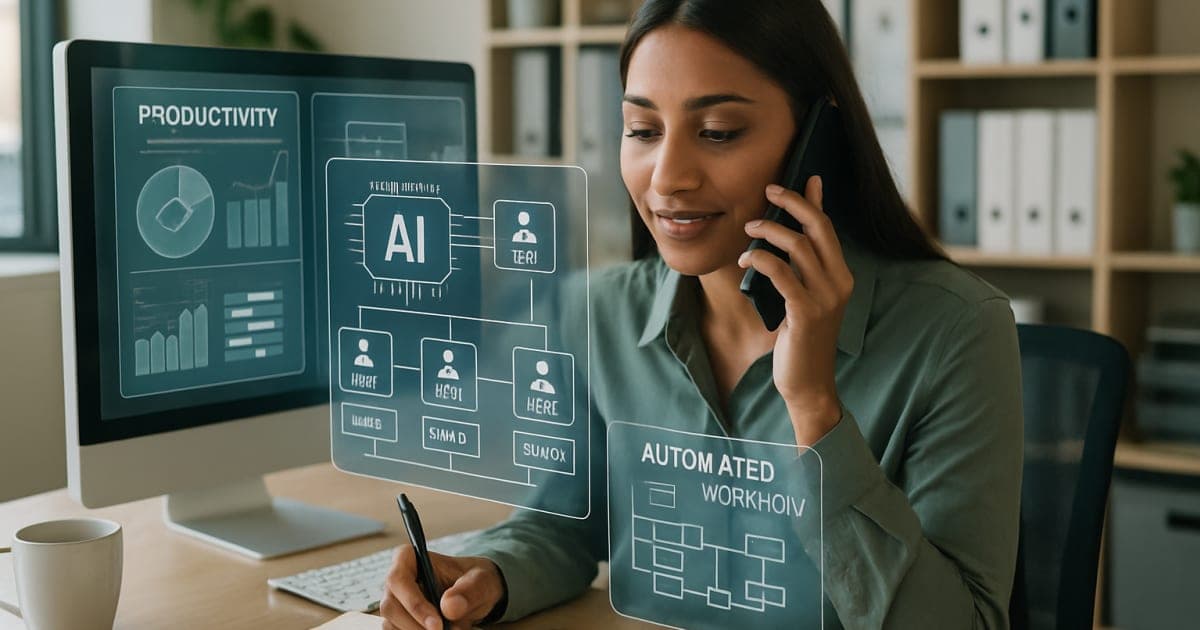
In today's rapidly evolving business landscape, artificial intelligence and automation technologies are transforming how companies operate, compete, and grow. Small and medium-sized businesses that embrace these innovations gain significant competitive advantages while those that don't risk falling behind.
Understanding Autonomous Technology for Business
Autonomous technology refers to systems that can operate independently with minimal human intervention, making decisions and executing tasks based on data analysis and predefined parameters. These systems leverage artificial intelligence, machine learning, and advanced algorithms to automate complex business processes that traditionally required manual oversight. For small businesses, this technology represents an opportunity to level the playing field with larger competitors by automating routine tasks and improving operational efficiency.
The most common applications include customer service chatbots, automated marketing campaigns, inventory management systems, and financial reporting tools. According to McKinsey research, companies that adopt AI technologies see productivity gains of up to 40% in their operations. Our automation solutions are specifically designed to help small businesses harness this power without requiring extensive technical expertise or massive upfront investments.
Key Benefits of Implementing Autonomous Systems
The primary advantage of autonomous technology lies in its ability to handle repetitive tasks with consistent accuracy while freeing up human resources for higher-value activities. Businesses typically see immediate improvements in data processing speed, customer response times, and overall operational efficiency. Cost reduction is another significant benefit, as automated systems can work around the clock without breaks, overtime pay, or benefits.
Quality control also improves dramatically when autonomous systems monitor processes and flag irregularities in real-time. Many of our clients report 60-80% reductions in manual errors after implementing our automated workflows. Additionally, these systems generate valuable insights through continuous data collection and analysis, enabling better decision-making and strategic planning that would be impossible to achieve through manual processes alone.
Common Implementation Challenges and Solutions
Despite the clear benefits, many small businesses hesitate to adopt autonomous technology due to perceived complexity and cost barriers. The most common concerns include integration with existing systems, employee resistance to change, and uncertainty about return on investment. However, modern autonomous solutions are designed with user-friendly interfaces and can often integrate seamlessly with popular business software platforms.
Training and change management represent crucial success factors that businesses often underestimate during implementation. Our AI implementation process includes comprehensive training programs and ongoing support to ensure smooth transitions. Gartner studies show that companies with structured implementation approaches are three times more likely to achieve successful outcomes compared to those without proper planning.
Industry-Specific Applications
Retail businesses benefit significantly from autonomous inventory management systems that predict demand, automate reordering, and optimize stock levels across multiple locations. Manufacturing companies use autonomous quality control systems to detect defects and maintain consistent product standards. Service-based businesses leverage chatbots and automated scheduling systems to improve customer experience while reducing administrative overhead.
Healthcare providers implement autonomous appointment scheduling and patient communication systems to streamline operations and reduce no-shows. Financial services firms use autonomous fraud detection and customer onboarding processes to improve security while accelerating service delivery. Our success stories showcase how businesses across various industries have achieved measurable improvements through strategic automation implementation.
Measuring Success and ROI
Successful autonomous technology implementation requires clear metrics and regular performance monitoring to ensure systems deliver expected results. Key performance indicators typically include process completion times, error rates, customer satisfaction scores, and cost savings per transaction. Most businesses see initial returns within 3-6 months, with full ROI achieved within the first year of implementation.
Businesses should establish baseline measurements before implementation and track improvements monthly to identify optimization opportunities. Advanced analytics dashboards provide real-time visibility into system performance and highlight areas for further automation or refinement. Regular reviews ensure that autonomous systems continue meeting business objectives as companies grow and evolve their operational requirements.
Future Trends and Considerations
The autonomous technology landscape continues evolving rapidly, with emerging capabilities in natural language processing, computer vision, and predictive analytics opening new possibilities for business automation. Small businesses should stay informed about these developments while focusing on mastering current implementations before adding complexity. Cloud-based solutions are making advanced technologies more accessible and affordable for smaller organizations.
Data privacy and security considerations become increasingly important as businesses rely more heavily on automated systems that process sensitive information. Companies must ensure their autonomous systems comply with relevant regulations while maintaining customer trust through transparent data handling practices. Our team stays current with industry trends and regulatory requirements to help businesses navigate these challenges successfully.
Frequently Asked Questions
How much does it cost to implement autonomous technology in a small business?
Implementation costs vary significantly based on business size, complexity, and specific automation requirements. Most small businesses invest between $5,000 and $25,000 for comprehensive automation solutions, with monthly subscription fees ranging from $200 to $1,000. You can view detailed pricing information to understand options that fit your budget and needs.
How long does it take to implement autonomous systems?
Implementation timelines typically range from 4-12 weeks depending on system complexity and integration requirements. Simple automation workflows can be deployed within 2-4 weeks, while comprehensive enterprise solutions may require 3-6 months. Our project managers work closely with your team to establish realistic timelines and ensure minimal disruption to daily operations.
Will autonomous technology replace my employees?
Will autonomous technology replace my employees?
Autonomous technology is designed to augment human capabilities rather than replace employees entirely. These systems handle routine, repetitive tasks while freeing your team to focus on strategic activities, customer relationships, and creative problem-solving. Most businesses find they can grow revenue without proportionally increasing staff costs, leading to improved profitability and job satisfaction.
What happens if the autonomous system makes mistakes?
All autonomous systems include built-in safeguards, error detection mechanisms, and human oversight protocols to minimize mistakes and their impact. Most systems are configured with escalation procedures that flag unusual situations for human review before taking action. Our solutions include comprehensive monitoring and alert systems that notify administrators of any irregularities requiring attention.
Do I need technical expertise to manage autonomous systems?
Modern autonomous systems are designed with user-friendly interfaces that require minimal technical knowledge to operate and monitor. We provide comprehensive training and ongoing support to ensure your team feels confident managing the systems. Most daily operations involve reviewing dashboards and approving exceptions rather than complex technical maintenance.
How secure are autonomous systems with sensitive business data?
Our autonomous systems employ enterprise-grade security measures including data encryption, secure access controls, and regular security audits. All systems comply with relevant industry standards and regulations such as GDPR, HIPAA, and SOX where applicable. We implement multi-layer security protocols to protect your data both in transit and at rest.
Can autonomous systems integrate with my existing software?
Most autonomous solutions are designed to integrate seamlessly with popular business software including CRM systems, accounting platforms, e-commerce tools, and productivity suites. Our implementation team conducts thorough compatibility assessments and develops custom integration solutions when needed. We ensure your autonomous systems work harmoniously with your existing technology stack rather than requiring complete system replacements.
Getting Started
Ready to transform your business operations with autonomous technology? The key to success lies in starting with a clear understanding of your specific needs and objectives, followed by strategic implementation with the right partner. Our team of experts will work with you to identify the most impactful automation opportunities and develop a customized roadmap for implementation. Don't let your competition gain the advantage – schedule a consultation today to discover how autonomous technology can drive growth and efficiency in your business.
Brandon Hufstetler
Principal and CEO of Autonomous Retail Technology
Brandon Hufstetler is an AI strategist and executive dedicated to helping businesses connect technology, data, and strategy to achieve real growth in the modern business era. As the Principal and CEO of Autonomous Retail Technology, he leads initiatives that use AI to streamline operations, enhance decision-making, and scale business impact. With nearly 25 years of experience spanning startups, scaling ventures, and large enterprises, Brandon has built a reputation for bridging the gap between innovation and execution. His approach blends business acumen with deep technical insight, enabling organizations to embrace AI in ways that are both responsible and transformative. Before founding Autonomous Retail Technology, Brandon spent more than a decade in senior leadership roles overseeing digital transformation, business development, and enterprise analytics. He is passionate about empowering leaders to navigate the evolving AI landscape with confidence, creativity, and measurable outcomes.
Ready to Automate Your Business?
Let's discuss how automation can transform your operations.
Book a Free Consultation