AI Agents for Business: How to Transform Customer Service and Slash Response Times
Customer service teams are overwhelmed, response times are climbing, and customers are leaving. AI agents for business are changing everything — delivering instant, intelligent, and personalized support around the clock without burning out your team. Here's exactly how to make it work.
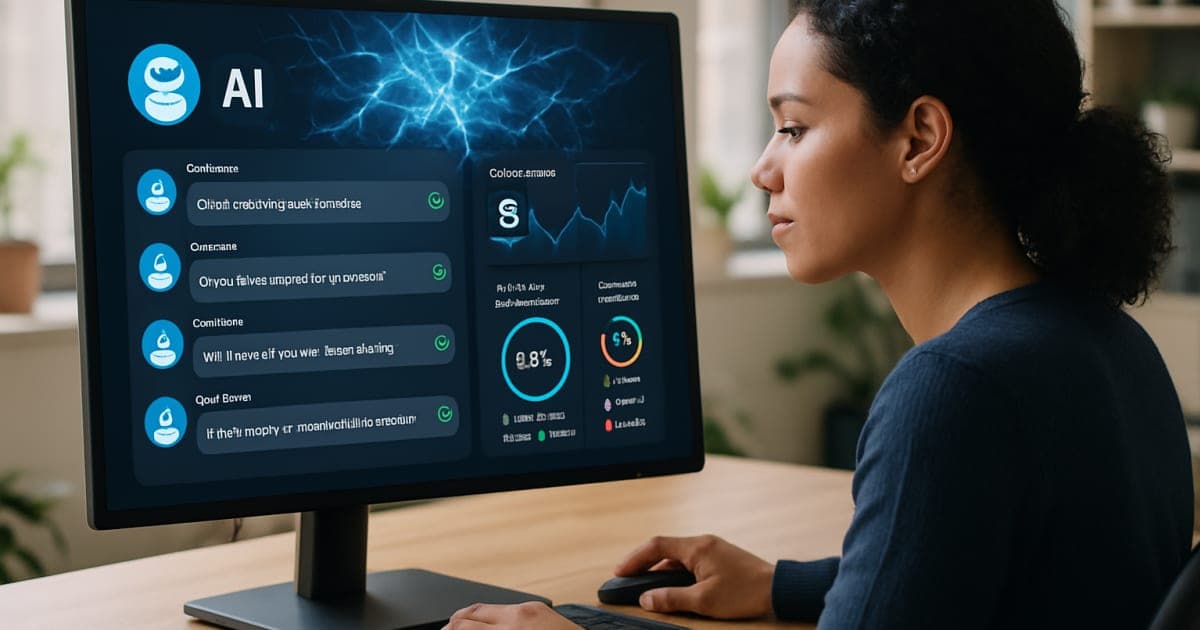
Artificial intelligence is no longer a luxury reserved for large corporations — it's a powerful tool that small businesses can use right now to save time, cut costs, and grow faster. Whether you're managing a team of five or fifty, AI-powered automation can transform the way you work and help you compete with bigger players in your market.
What Is AI Automation and Why Does It Matter for Small Businesses?
AI automation refers to the use of artificial intelligence to handle repetitive, time-consuming tasks that would otherwise require human effort. Think of things like answering customer emails, scheduling appointments, processing invoices, or sorting through data — all of these can be handled by smart software that learns and improves over time. For small business owners, this means fewer hours spent on administrative work and more time focused on growing your business. According to McKinsey's research on generative AI, automation has the potential to boost global productivity significantly, and small businesses stand to gain just as much as large enterprises.
Many small business owners assume that AI tools are complicated, expensive, or only built for tech-savvy teams. The reality is quite the opposite — today's AI platforms are designed to be user-friendly, affordable, and fast to implement. You don't need a dedicated IT department or a computer science degree to get started. The barrier to entry has dropped dramatically, which means the competitive advantage is now available to any business owner willing to take the first step. If you're curious about how this works in practice, our AI implementation guide walks you through the entire process from start to finish.
The Biggest Time Wasters Hurting Your Business Today
Most small business owners are running on empty — juggling customer service, marketing, operations, and finances all at once. Studies show that employees spend an average of 20% of their workweek on tasks that could be automated, including searching for information, sending routine emails, and manually entering data. That's one full day every week that could be redirected toward higher-value work. When you multiply that across your entire team, the hours lost to manual tasks become a serious drag on growth and profitability.
Common time wasters include responding to frequently asked questions, following up with leads who haven't converted yet, generating reports, scheduling meetings, and managing social media posts. These tasks feel necessary in the moment, but they rarely move the needle on revenue. AI automation tools can handle all of these with little to no human input once they're set up correctly. Imagine your business running smoothly in the background while you focus on strategy, customer relationships, and the work only you can do. You can explore real examples of how businesses like yours have reclaimed their time by visiting our success stories page.
Key Areas Where AI Automation Delivers the Fastest Results
Not all automation is created equal, and some areas of your business will see faster, more dramatic results than others. Customer service automation is one of the quickest wins — AI chatbots can handle common questions 24/7, reducing response times from hours to seconds. Marketing automation is another high-impact area, allowing you to send personalized emails, follow up with leads, and post on social media without lifting a finger. According to Salesforce's State of the Connected Customer report, 84% of customers say being treated like a person, not a number, is very important to winning their business — and AI can help you do exactly that at scale.
Sales automation is another area that delivers fast ROI for small businesses. Tools that automatically score leads, send follow-up sequences, and notify your sales team at the right moment can dramatically increase your close rate without adding headcount. Financial automation — including invoice processing, expense tracking, and payroll — reduces errors and frees up hours that your accounting team would otherwise spend on manual entry. Operations tools can automatically reorder inventory, schedule staff, and generate performance reports. The key is identifying which pain points cost you the most time and money, then attacking those first for maximum impact.
HR and hiring processes are also ripe for automation, from screening resumes to sending onboarding documents. Even project management can benefit — AI tools can assign tasks, track deadlines, and flag bottlenecks before they become problems. The breadth of what's possible can feel overwhelming, which is why we recommend starting with one or two core areas and expanding from there. Our team can help you identify your highest-priority opportunities through a simple consultation. Check out our automation solutions to see which options fit your business best.
How to Choose the Right AI Automation Tools for Your Business
With hundreds of AI tools on the market, choosing the right ones can feel like a minefield. The first step is to clearly define the problem you're trying to solve before you start shopping for solutions. Are you losing leads because follow-up takes too long? Is customer service eating up your team's day? Are your marketing efforts inconsistent because nobody has time to plan? Answering these questions will help you narrow your focus and avoid the trap of buying shiny tools that don't actually solve your core problems.
Look for tools that integrate with the software you're already using — your CRM, email platform, accounting software, and project management tools. Switching costs are real, and forcing your team to learn an entirely new ecosystem can slow adoption and reduce ROI. The best AI automation platforms are designed to connect with existing tools rather than replace them. Ease of use matters enormously for small business teams that don't have dedicated technical support. Read reviews from businesses similar to yours, request demos, and always look for tools that offer strong onboarding and customer support.
Pricing is also a critical factor — but don't make the mistake of choosing solely based on upfront cost. Consider the value the tool delivers relative to its price, including time saved, errors reduced, and revenue generated. A tool that costs $200 per month but saves your team 20 hours of work is an excellent investment. Many platforms offer free trials or tiered pricing that lets you start small and scale up as your needs grow. Visit our pricing page to see transparent, flexible options designed specifically for small and mid-sized businesses.
Common Mistakes Small Businesses Make When Implementing AI
The biggest mistake businesses make when adopting AI automation is trying to automate everything at once. This approach overwhelms your team, creates confusion, and often leads to poor results that make people skeptical of the technology altogether. Instead, pick one process, automate it well, measure the results, and then expand. Small wins build confidence and create momentum for broader adoption across your organization.
Another common mistake is failing to involve the people who will actually use the tools. If your customer service team feels like automation is being imposed on them rather than designed with them, resistance will slow everything down. Get buy-in early by explaining how automation will make their jobs easier, not threaten their positions. People are more likely to embrace change when they understand the "why" behind it and feel like their input was considered. According to Harvard Business Review, organizations that prioritize people-centered AI implementation see significantly better results than those that treat it purely as a technology project.
Businesses also frequently underestimate the importance of clean, organized data. AI tools are only as good as the information you feed them — if your customer records are incomplete, your email lists are outdated, or your inventory data is inaccurate, automation will amplify those problems rather than solve them. Before implementing any AI solution, take time to audit and clean your core data sources. This groundwork might feel unglamorous, but it's the foundation on which successful automation is built. Our team has seen this make the difference between a rollout that fails and one that delivers measurable results within weeks.
Real Results: What Small Businesses Are Achieving with AI Automation
The proof is in the numbers — small businesses that have embraced AI automation are seeing real, measurable improvements in efficiency, revenue, and customer satisfaction. A local marketing agency using automated lead follow-up saw their conversion rate increase by 35% in just 90 days, without adding a single salesperson. A small e-commerce retailer that implemented AI-powered customer service reduced support ticket volume by 60%, freeing their team to focus on proactive outreach instead of reactive problem-solving. These aren't outliers — they're representative of what happens when automation is implemented thoughtfully and strategically.
According to Gartner's AI research, businesses that adopt AI-powered automation report an average productivity increase of 25-40%, with the greatest gains seen in customer-facing and administrative functions. For a small business where every dollar and every hour counts, that kind of improvement can be genuinely transformative. It can mean the difference between staying flat and scaling, between burning out and thriving. The businesses seeing these results aren't doing anything magical — they're simply applying the right tools to the right problems with a clear strategy in place.
We've documented many of these journeys in detail on our website. Whether you're in retail, professional services, healthcare, hospitality, or any other industry, chances are a business very similar to yours has already walked this path successfully. Reading about their experiences can help you understand what's possible, avoid common pitfalls, and get inspired to take action. You can find detailed breakdowns of real implementations on our client success stories page, where we share specific numbers, timelines, and lessons learned.
Building a Long-Term AI Strategy for Sustainable Growth
AI automation isn't a one-time project — it's an ongoing strategy that evolves as your business grows and technology advances. The businesses that get the most out of AI are the ones that treat it as a continuous process of learning, testing, and improving. Start with your most pressing pain points, measure results rigorously, and use those insights to guide your next automation initiative. Over time, you'll build an increasingly efficient operation where your team spends more time on creative, strategic, and relationship-driven work.
A long-term AI strategy should also include regular reviews of the tools you're using to make sure they're still the best fit for your needs. The AI landscape is evolving rapidly, and newer, better solutions emerge frequently. Building a culture of openness to change and experimentation within your team will help you stay ahead of competitors who are slower to adapt. It's also worth investing in basic AI literacy for your team — not deep technical training, but enough understanding to recognize opportunities and troubleshoot basic issues independently.
Partnering with the right implementation partner can make all the difference in how quickly and effectively you build this long-term capability. Rather than figuring everything out on your own, working with experts who have helped dozens of businesses like yours shortens the learning curve dramatically and reduces costly mistakes. Our team at Autonomous Technology is built specifically to support small and mid-sized businesses through this journey. Learn more about what makes our approach different on our about page, or reach out directly to start a conversation about your specific needs.
Frequently Asked Questions
How much does AI automation cost for a small business?
The cost of AI automation varies widely depending on the tools you choose and the complexity of what you're automating. Many platforms offer entry-level plans starting at $50–$200 per month, while more comprehensive enterprise solutions can run into the thousands. The most important thing to consider isn't the upfront cost but the return on investment — most small businesses recoup their automation investment within three to six months through time saved and revenue gained. Visit our pricing page for a full breakdown of flexible options designed for businesses of all sizes.
Do I need technical expertise to implement AI automation?
No, you don't need to be a tech expert to use most modern AI automation tools — they're designed with non-technical users in mind. Most platforms offer drag-and-drop interfaces, pre-built templates, and step-by-step onboarding guides that make setup straightforward. If you do run into challenges, working with an implementation partner like Autonomous Technology means you have expert support at every stage. The goal is to make powerful technology accessible to every business owner, regardless of technical background.
Will AI automation replace my employees?
AI automation is designed to handle repetitive, rule-based tasks — not to replace the human judgment, creativity, and relationship-building that your team provides. In most cases, automation frees your employees from tedious work so they can focus on higher-value activities that require a human touch. Think of it as giving your team a digital assistant that handles the busywork. Businesses that communicate this clearly to their teams tend to see enthusiastic adoption rather than resistance.
How long does it take to see results from AI automation?
Most small businesses start seeing measurable results within 30 to 90 days of implementing their first automation workflows. The timeline depends on what you're automating, how clean your existing data is, and how quickly your team adopts the new tools. Simpler automations like email follow-ups and appointment scheduling often show results within the first two weeks. More complex implementations — like full sales pipeline automation or multi-channel marketing — may take a bit longer to optimize but deliver proportionally larger returns.
Is my business data safe when using AI automation tools?
Data security is a top concern for any business considering AI tools, and rightfully so. Reputable AI automation platforms use enterprise-grade encryption, secure data centers, and strict access controls to protect your information. Before adopting any tool, review its security certifications, data storage policies, and compliance with regulations like GDPR or CCPA if applicable to your business. Always choose vendors who are transparent about how your data is used and who offer clear data ownership policies.
What's the best first process to automate in a small business?
The best first process to automate is usually the one that costs you the most time or causes the most frustration on a daily basis. For many small businesses, this is lead follow-up, appointment scheduling, or customer support for frequently asked questions. These areas have clear, repeatable steps that are easy to map out and automate quickly, making them ideal for building early momentum. Start simple, measure the impact, and use those wins to build confidence for your next automation project. Our automation solutions page can help you identify the best starting point for your specific industry and business model.
How do I know if my business is ready for AI automation?
If your team is regularly overwhelmed by repetitive tasks, if important follow-ups are falling through the cracks, or if inconsistent processes are costing you customers, your business is more than ready for automation. You don't need to be a certain size or have a sophisticated tech stack — businesses with as few as two or three employees have successfully implemented AI automation and seen major benefits. The most important indicator of readiness is a willingness to examine your current workflows and commit to making improvements. A short consultation with our team can help you assess exactly where you stand and what your best next steps look like.
Getting Started with AI Automation Today
The gap between businesses that use AI automation and those that don't is growing wider every day — and the businesses on the right side of that gap are winning more customers, operating more efficiently, and scaling with far less stress. The good news is that getting started doesn't have to be complicated, expensive, or risky. With the right partner, the right tools, and a clear starting point, you can begin seeing real results within weeks. There has never been a better time to take this step, and waiting only means falling further behind competitors who are already moving forward.
At Autonomous Technology, we specialize in helping small and mid-sized businesses implement AI automation in a way that's practical, affordable, and tailored to your specific goals. We're not here to sell you a generic software package — we're here to build a solution that actually fits the way your business works. Whether you're just starting to explore what's possible or you're ready to implement right away, we're here to help. Schedule a free consultation with our team today and take the first step toward a smarter, more efficient business.
Brandon Hufstetler
Principal and CEO of Autonomous Retail Technology
Brandon Hufstetler is an AI strategist and executive dedicated to helping businesses connect technology, data, and strategy to achieve real growth in the modern business era. As the Principal and CEO of Autonomous Retail Technology, he leads initiatives that use AI to streamline operations, enhance decision-making, and scale business impact. With nearly 25 years of experience spanning startups, scaling ventures, and large enterprises, Brandon has built a reputation for bridging the gap between innovation and execution. His approach blends business acumen with deep technical insight, enabling organizations to embrace AI in ways that are both responsible and transformative. Before founding Autonomous Retail Technology, Brandon spent more than a decade in senior leadership roles overseeing digital transformation, business development, and enterprise analytics. He is passionate about empowering leaders to navigate the evolving AI landscape with confidence, creativity, and measurable outcomes.
Ready to Automate Your Business?
Let's discuss how automation can transform your operations.
Book a Free Consultation