AI Automation for Small Business: Cut Operational Costs by 40% in 2024
Small businesses are leveraging AI automation to slash operational costs while improving efficiency. From automated customer service to streamlined inventory management, discover how the right AI tools can transform your bottom line and free up resources for growth.
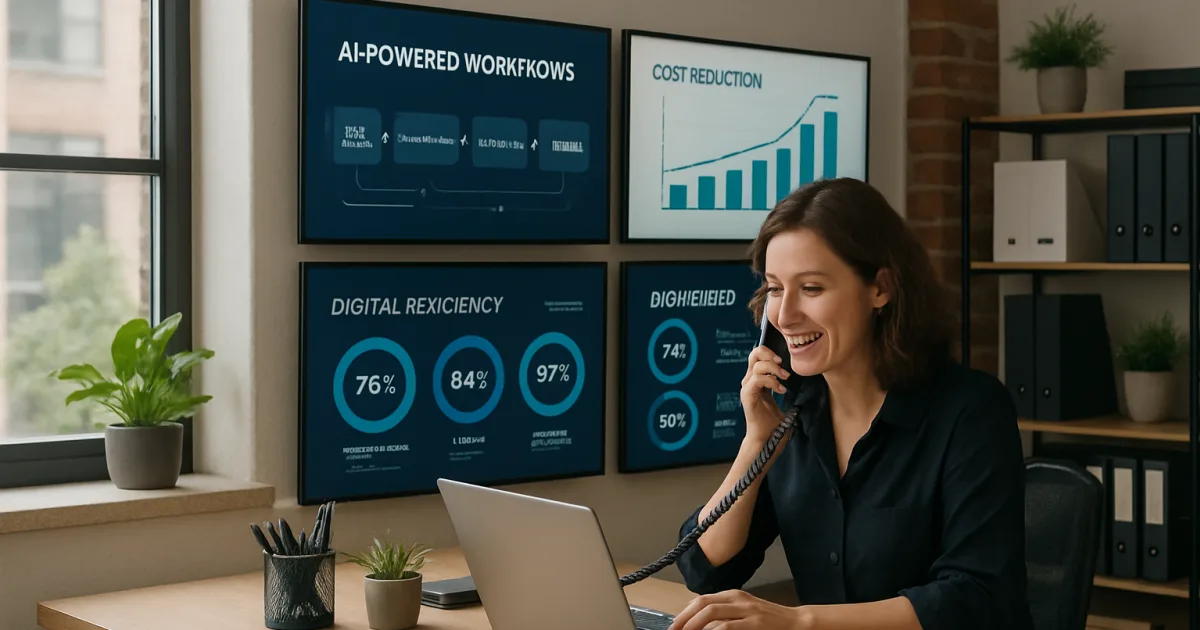
Small businesses today face mounting pressure to streamline operations while controlling costs, making automation technology a critical competitive advantage. Smart automation solutions can transform repetitive tasks, reduce human error, and free your team to focus on high-value activities that drive growth and customer satisfaction.
Understanding Business Process Automation
Business process automation (BPA) involves using technology to execute recurring tasks or processes with minimal human intervention. This strategic approach helps companies standardize workflows, improve accuracy, and significantly reduce the time spent on manual activities. For small businesses, automation represents an opportunity to compete with larger organizations by operating more efficiently with fewer resources.
Modern automation goes beyond simple task scheduling to include intelligent decision-making capabilities powered by artificial intelligence. These systems can analyze data patterns, trigger actions based on specific conditions, and adapt to changing business requirements. According to McKinsey research, businesses implementing automation see productivity gains of 20-35% across various operational areas.
Key Areas Where Automation Transforms Operations
Customer service automation revolutionizes how businesses handle inquiries, support tickets, and follow-up communications. Automated chatbots can handle routine questions 24/7, while intelligent routing systems ensure complex issues reach the right team members immediately. This approach reduces response times and allows your staff to focus on building meaningful customer relationships rather than managing repetitive inquiries.
Financial processes offer tremendous automation opportunities, from invoice generation and payment processing to expense tracking and financial reporting. Automated systems can extract data from receipts, categorize expenses, and generate comprehensive reports without manual data entry. These automation solutions eliminate human error in calculations and ensure consistent compliance with accounting standards.
Marketing automation enables small businesses to nurture leads, segment customers, and deliver personalized communications at scale. Automated email sequences, social media posting, and lead scoring help maintain consistent customer engagement without requiring constant manual oversight. This systematic approach to marketing helps convert prospects into customers while maintaining relationships with existing clients.
Implementation Strategies for Small Business Success
Successful automation implementation begins with identifying processes that are repetitive, time-consuming, and rule-based. Start by documenting your current workflows to pinpoint bottlenecks and inefficiencies that automation can address. Focus on processes that directly impact customer experience or consume significant staff time, as these areas typically deliver the highest return on investment.
Choose automation tools that integrate seamlessly with your existing business systems and can scale as your company grows. Cloud-based solutions often provide the flexibility and affordability that small businesses need, eliminating the need for significant upfront infrastructure investments. Our AI implementation approach ensures smooth integration with minimal disruption to daily operations.
Develop a phased implementation plan that allows your team to adapt gradually to new automated processes. Begin with simple, low-risk automations to build confidence and demonstrate value before tackling more complex workflows. This measured approach helps ensure employee buy-in and reduces the likelihood of implementation challenges.
Measuring Return on Investment
Calculate automation ROI by tracking both direct cost savings and indirect productivity improvements across your organization. Direct savings include reduced labor costs for manual tasks, while indirect benefits encompass improved accuracy, faster processing times, and enhanced customer satisfaction scores. Establish baseline metrics before implementation to accurately measure improvements over time.
Monitor key performance indicators such as task completion times, error rates, and employee satisfaction to gauge automation effectiveness. According to Forrester research, companies typically see ROI within 6-18 months of implementing comprehensive automation strategies. Regular assessment helps identify additional optimization opportunities and ensures your automation investments continue delivering value.
Document success stories and share results with your team to maintain momentum and identify new automation candidates. Our success stories demonstrate how similar businesses have achieved significant improvements through strategic automation implementation.
Common Challenges and Solutions
Employee resistance often presents the biggest obstacle to automation adoption, as team members may fear job displacement or struggle with change management. Address these concerns through clear communication about automation's role in enhancing rather than replacing human capabilities. Provide comprehensive training and emphasize how automation eliminates tedious tasks, allowing employees to focus on more engaging and strategic work.
Technical integration challenges can arise when connecting automation tools with legacy systems or disparate software platforms. Work with experienced automation providers who understand small business technology constraints and can recommend compatible solutions. Gartner analysis shows that businesses with proper technical planning experience 40% fewer implementation issues.
Budget constraints require careful prioritization of automation projects based on potential impact and implementation complexity. Start with high-impact, low-cost automations to generate quick wins and fund more comprehensive projects. Our flexible pricing information helps small businesses access enterprise-level automation capabilities within realistic budget parameters.
Future-Proofing Your Automation Strategy
Artificial intelligence and machine learning capabilities are rapidly expanding automation possibilities beyond simple rule-based processes. These technologies enable predictive analytics, natural language processing, and adaptive decision-making that can transform how small businesses operate and compete. Staying informed about emerging automation technologies helps ensure your investments remain relevant and valuable.
Consider scalability when selecting automation platforms, choosing solutions that can grow with your business and accommodate changing requirements. Cloud-based automation tools typically offer the flexibility to add features, increase capacity, and integrate new technologies without significant infrastructure changes. This approach protects your automation investment while providing room for future expansion.
Regularly review and update your automation strategy to incorporate new capabilities and address evolving business needs. Technology advances quickly, and automation tools that seemed cutting-edge two years ago may now have more powerful alternatives available. Stay connected with automation experts and industry resources to identify optimization opportunities and emerging best practices.
Frequently Asked Questions
How much does business automation typically cost for small companies?
Business automation costs vary significantly based on complexity and scope, but small businesses can start with basic automation tools for as little as $20-100 per month. More comprehensive solutions typically range from $500-2000 monthly depending on the number of processes automated and users involved. Most businesses see positive ROI within 6-12 months through reduced labor costs and improved efficiency.
Which business processes should I automate first?
Start with repetitive, time-consuming tasks that follow clear rules and don't require complex decision-making. Common first automation targets include email marketing, invoice processing, appointment scheduling, and basic customer service responses. Focus on processes that directly impact customer experience or consume significant staff time for the highest initial return on investment.
Will automation eliminate jobs at my small business?
Automation typically transforms rather than eliminates jobs, allowing employees to focus on higher-value activities like customer relationship building, strategic planning, and creative problem-solving. While some routine tasks become automated, most small businesses use the efficiency gains to grow their operations and create new opportunities for their team members. Proper change management and training help employees adapt successfully to automated workflows.
How long does it take to implement automation solutions?
Simple automation implementations can be completed within 1-4 weeks, while more comprehensive solutions typically require 2-6 months for full deployment. The timeline depends on process complexity, system integrations required, and team training needs. Starting with pilot projects helps establish realistic expectations and builds confidence before tackling larger automation initiatives.
What technical skills does my team need for automation?
Modern automation platforms are designed for business users without extensive technical backgrounds, featuring drag-and-drop interfaces and pre-built templates. Your team needs basic computer skills and willingness to learn new software, but programming knowledge isn't typically required. Most automation providers offer training and support to help your staff become proficient with the tools.
How do I ensure data security with automated systems?
Choose automation platforms that offer enterprise-grade security features including data encryption, access controls, and compliance certifications relevant to your industry. Regularly review user permissions, implement strong password policies, and ensure automated systems follow the same security protocols as your other business applications. Work with reputable automation providers who prioritize data protection and offer transparent security practices.
Can I integrate automation with my existing business software?
Most modern automation platforms offer extensive integration capabilities with popular business applications including CRM systems, accounting software, email platforms, and e-commerce tools. API connections and pre-built integrations make it possible to automate workflows across multiple systems without replacing your existing software. Our consultation process includes integration assessment to ensure seamless connectivity with your current technology stack.
Getting Started
Ready to transform your business operations through intelligent automation? The key to success lies in starting with clear objectives and choosing the right implementation partner who understands small business challenges and opportunities. Our team specializes in helping companies like yours identify automation opportunities, select appropriate technologies, and implement solutions that deliver measurable results. Explore our automation solutions today to discover how we can help streamline your operations and accelerate your business growth.
Brandon Hufstetler
Principal and CEO of Autonomous Retail Technology
Brandon Hufstetler is an AI strategist and executive dedicated to helping businesses connect technology, data, and strategy to achieve real growth in the modern business era. As the Principal and CEO of Autonomous Retail Technology, he leads initiatives that use AI to streamline operations, enhance decision-making, and scale business impact. With nearly 25 years of experience spanning startups, scaling ventures, and large enterprises, Brandon has built a reputation for bridging the gap between innovation and execution. His approach blends business acumen with deep technical insight, enabling organizations to embrace AI in ways that are both responsible and transformative. Before founding Autonomous Retail Technology, Brandon spent more than a decade in senior leadership roles overseeing digital transformation, business development, and enterprise analytics. He is passionate about empowering leaders to navigate the evolving AI landscape with confidence, creativity, and measurable outcomes.
Ready to Automate Your Business?
Let's discuss how automation can transform your operations.
Book a Free Consultation