AI Training Solutions: The Ultimate Guide to Transforming Your Customer Service Excellence
Transform your customer service operations with cutting-edge AI training solutions. Learn how artificial intelligence can dramatically improve response times, enhance customer satisfaction, and create seamless support experiences that drive business growth.
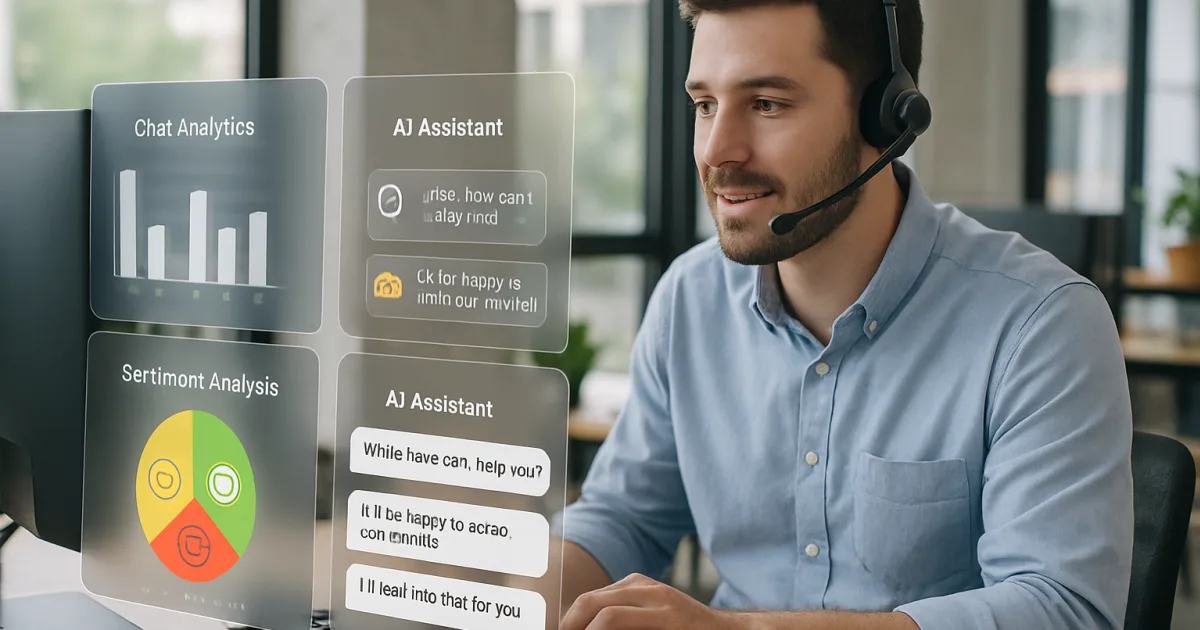
Small businesses today face unprecedented competition and rising operational costs, making efficiency more critical than ever. Autonomous technology and AI-powered automation offer game-changing solutions that can transform how you run your business, reduce manual work, and boost profitability.
Understanding Autonomous Technology for Small Business
Autonomous technology refers to systems that can operate independently with minimal human intervention, using artificial intelligence to make decisions and perform tasks. For small businesses, this means automating repetitive processes, improving customer service, and streamlining operations without the need for large technical teams. Unlike traditional automation that follows rigid rules, autonomous systems learn and adapt to changing conditions, making them ideal for dynamic business environments.
The beauty of modern autonomous technology lies in its accessibility and affordability for smaller operations. Cloud-based AI solutions have dramatically reduced the barrier to entry, allowing businesses with limited budgets to implement sophisticated automation systems. These technologies can handle everything from customer inquiries and appointment scheduling to inventory management and financial reporting, freeing up valuable time for strategic business growth.
Key Benefits of AI Automation for Growing Businesses
The primary advantage of implementing autonomous technology is the dramatic reduction in operational costs and human error. McKinsey research shows that businesses can reduce processing costs by up to 70% through intelligent automation. AI systems work 24/7 without breaks, sick days, or vacation time, ensuring consistent service delivery and operational continuity.
Beyond cost savings, autonomous technology provides unprecedented scalability for growing businesses. Traditional scaling requires proportional increases in staff and resources, but AI-powered systems can handle exponentially more work without linear cost increases. This means you can serve more customers, process more orders, and manage more complex operations without overwhelming your team or budget.
Customer satisfaction also improves significantly with autonomous technology implementation. AI chatbots provide instant responses to customer inquiries, automated email sequences nurture leads more effectively, and predictive analytics help you anticipate customer needs. Our success stories demonstrate how businesses have achieved up to 40% improvements in customer satisfaction scores after implementing comprehensive automation solutions.
Common Applications and Use Cases
Customer service automation represents one of the most impactful applications for small businesses. AI-powered chatbots can handle routine inquiries, schedule appointments, process returns, and even provide personalized product recommendations based on customer history. These systems integrate seamlessly with existing websites and social media platforms, ensuring consistent customer experience across all touchpoints.
Marketing automation is another game-changer for resource-constrained businesses. Autonomous systems can segment customers, create personalized email campaigns, manage social media posting, and track campaign performance in real-time. HubSpot data indicates that businesses using marketing automation see 451% increase in qualified leads and 34% improvement in sales productivity.
Financial management and reporting benefit tremendously from autonomous technology implementation. AI systems can categorize expenses, generate invoices, track payments, and create detailed financial reports without manual data entry. This not only saves time but also reduces accounting errors and provides real-time insights into business performance, enabling faster decision-making and improved cash flow management.
Implementation Strategies That Work
Successful autonomous technology implementation starts with identifying the highest-impact, lowest-risk processes in your business. Begin with repetitive, time-consuming tasks that don't require complex human judgment, such as data entry, appointment scheduling, or basic customer inquiries. This approach allows you to see immediate benefits while building confidence in the technology before tackling more complex processes.
The key to smooth implementation lies in choosing the right technology partner and taking a phased approach. Our AI implementation process focuses on gradual integration that doesn't disrupt existing operations. Start with pilot programs in one department or process, measure results, refine the system, and then expand to other areas of your business.
Employee training and change management are crucial components of successful implementation. Your team needs to understand how autonomous technology will enhance rather than replace their roles, focusing their efforts on higher-value activities that require human creativity and judgment. Proper training ensures smooth adoption and maximizes the return on your technology investment.
Measuring ROI and Success Metrics
Tracking the right metrics is essential for demonstrating the value of autonomous technology investments. Focus on measurable outcomes such as time saved, error reduction, customer response times, and cost per transaction. These concrete metrics provide clear evidence of improvement and help justify continued investment in automation initiatives.
Financial metrics should include both direct cost savings and revenue improvements. Calculate the cost of manual processes versus automated alternatives, factoring in employee time, error correction costs, and opportunity costs of delayed responses. Forrester research shows that well-implemented automation projects typically achieve 200-300% ROI within the first year.
Customer satisfaction metrics provide insight into the quality impact of automation. Monitor customer service response times, resolution rates, and satisfaction scores before and after implementation. Many businesses find that while they reduce costs through automation, they simultaneously improve customer experience through faster, more consistent service delivery.
Future-Proofing Your Business with Smart Technology
The competitive landscape continues to evolve rapidly, with businesses that embrace autonomous technology gaining significant advantages over those that rely solely on manual processes. Early adopters position themselves to capture market share from slower-moving competitors while building operational capabilities that become increasingly difficult to replicate. This technological advantage compounds over time, creating sustainable competitive moats.
Investment in autonomous technology also prepares your business for future growth and market changes. Scalable AI systems adapt to increased demand without proportional cost increases, while data-driven insights help you identify new opportunities and optimize existing operations. Our comprehensive automation solutions are designed to grow with your business, ensuring long-term value from your technology investment.
The regulatory and market environment increasingly favors businesses that can demonstrate efficiency, accuracy, and consistent service delivery. Autonomous technology helps meet these requirements while positioning your business for success in an increasingly digital marketplace. Companies that delay automation adoption risk falling behind competitors who leverage these tools for operational excellence.
Frequently Asked Questions
How much does it cost to implement autonomous technology in a small business?
Implementation costs vary widely based on your specific needs and chosen solutions, typically ranging from a few hundred to several thousand dollars monthly. Many cloud-based AI tools offer subscription models that scale with your usage, making them affordable for businesses of all sizes. The key is starting with high-impact, low-cost solutions and expanding gradually as you see returns on your investment.
Will autonomous technology replace my employees?
Autonomous technology is designed to augment human capabilities rather than replace employees entirely. It handles repetitive, time-consuming tasks so your team can focus on creative problem-solving, customer relationship building, and strategic initiatives that drive business growth. Most successful implementations result in role evolution rather than job elimination.
How long does it take to see results from AI automation?
Most businesses see immediate improvements in efficiency and accuracy within the first month of implementation. Significant ROI typically becomes apparent within 3-6 months as systems optimize and teams adapt to new workflows. The timeline depends on the complexity of processes being automated and the scope of implementation.
What technical expertise do I need to implement autonomous technology?
Modern autonomous technology platforms are designed for business users without extensive technical backgrounds. Most solutions offer user-friendly interfaces and comprehensive support during implementation. Working with an experienced technology partner can further simplify the process and ensure optimal results.
Is my business data secure with autonomous technology solutions?
Reputable autonomous technology providers implement enterprise-grade security measures including data encryption, secure cloud storage, and compliance with industry standards. These systems often provide better security than traditional manual processes by eliminating human error and implementing consistent security protocols. Always verify security certifications and data handling practices before selecting a provider.
Can autonomous technology integrate with my existing business systems?
Most modern AI automation platforms are designed to integrate seamlessly with popular business software including CRM systems, accounting software, and e-commerce platforms. APIs and pre-built connectors make integration straightforward, often requiring minimal technical work. Check our pricing and integration options to see compatibility with your current systems.
What happens if the autonomous system makes mistakes or breaks down?
Quality autonomous technology solutions include monitoring systems, error detection, and fallback procedures to handle unexpected situations. Most platforms offer human oversight options and can be configured to escalate complex issues to your team. Regular system monitoring and maintenance ensure optimal performance and quick resolution of any issues that arise.
Getting Started
Ready to transform your business with autonomous technology? The key to success is taking that first step and working with experienced partners who understand the unique challenges facing small businesses. Our team specializes in helping companies like yours implement practical, cost-effective automation solutions that deliver measurable results. Schedule a consultation today to discover how autonomous technology can revolutionize your operations, reduce costs, and accelerate growth in your industry.
Brandon Hufstetler
Principal and CEO of Autonomous Retail Technology
Brandon Hufstetler is an AI strategist and executive dedicated to helping businesses connect technology, data, and strategy to achieve real growth in the modern business era. As the Principal and CEO of Autonomous Retail Technology, he leads initiatives that use AI to streamline operations, enhance decision-making, and scale business impact. With nearly 25 years of experience spanning startups, scaling ventures, and large enterprises, Brandon has built a reputation for bridging the gap between innovation and execution. His approach blends business acumen with deep technical insight, enabling organizations to embrace AI in ways that are both responsible and transformative. Before founding Autonomous Retail Technology, Brandon spent more than a decade in senior leadership roles overseeing digital transformation, business development, and enterprise analytics. He is passionate about empowering leaders to navigate the evolving AI landscape with confidence, creativity, and measurable outcomes.
Ready to Automate Your Business?
Let's discuss how automation can transform your operations.
Book a Free Consultation