Transform Customer Service with AI Training Solutions: A Complete Guide for Business Success
Poor customer service costs businesses billions annually. Learn how AI training solutions can transform your customer support operations, reduce response times by 80%, and boost customer satisfaction scores while cutting operational costs.
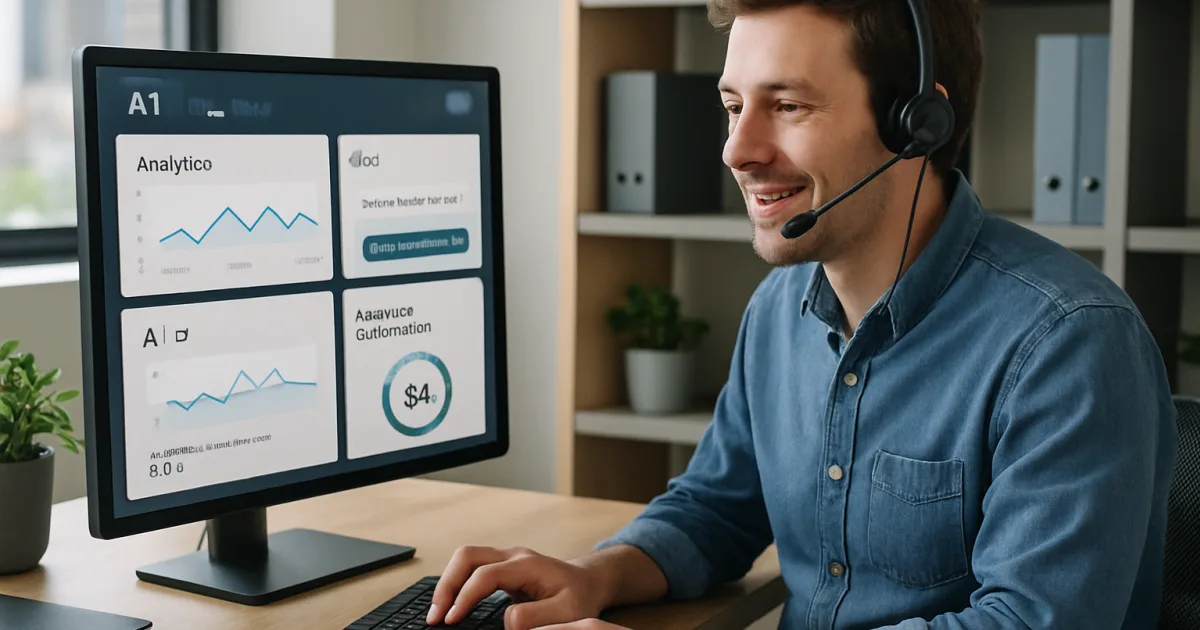
Autonomous technology is transforming how businesses operate, offering unprecedented opportunities for efficiency, cost reduction, and competitive advantage. Small business owners who embrace intelligent automation today position themselves for sustainable growth and long-term success in an increasingly digital marketplace.
Understanding Autonomous Technology in Business
Autonomous technology refers to systems that can perform tasks and make decisions without constant human intervention, leveraging artificial intelligence, machine learning, and advanced algorithms. For small businesses, this technology represents a game-changing opportunity to compete with larger enterprises by automating routine processes and optimizing operations. Unlike traditional automation that follows rigid rules, autonomous systems adapt and learn from data, continuously improving their performance over time. Modern autonomous solutions range from simple chatbots handling customer inquiries to sophisticated inventory management systems that predict demand patterns.
The key advantage of autonomous technology lies in its ability to handle complex, variable tasks that previously required human judgment. Small businesses can now access enterprise-level capabilities at affordable price points, thanks to cloud-based solutions and improved accessibility. According to McKinsey research, businesses implementing autonomous technologies see average productivity gains of 20-25% within the first year of deployment.
Key Benefits for Small Business Operations
Autonomous technology delivers measurable benefits that directly impact your bottom line, starting with significant cost savings through reduced labor costs and improved operational efficiency. Small businesses using our automation solutions typically see 30-40% reduction in manual task completion times, freeing up valuable human resources for strategic activities. Enhanced accuracy represents another crucial benefit, as autonomous systems eliminate human error in data entry, calculations, and routine decision-making processes. Customer satisfaction improves dramatically when autonomous systems provide 24/7 availability, instant responses, and consistent service quality.
Scalability becomes effortless with autonomous technology, allowing businesses to handle increased workloads without proportional increases in staffing costs. Data-driven insights emerge naturally from autonomous systems, providing business owners with real-time analytics and predictive capabilities that inform better strategic decisions. Competitive advantage grows as businesses respond faster to market changes, customer needs, and operational challenges through intelligent automation.
Common Applications Across Industries
Customer service automation stands as the most popular entry point for small businesses, with intelligent chatbots and virtual assistants handling routine inquiries, appointment scheduling, and basic troubleshooting. Inventory management systems automatically track stock levels, predict reorder points, and generate purchase orders based on historical data and seasonal trends. Financial processes benefit enormously from autonomous technology, with systems handling invoicing, expense categorization, payroll processing, and basic bookkeeping tasks with minimal oversight.
Marketing automation platforms demonstrate remarkable ROI by managing email campaigns, social media posting, lead scoring, and customer segmentation without constant manual intervention. Sales processes become more efficient through autonomous lead qualification, follow-up scheduling, and pipeline management that ensures no opportunities fall through cracks. Our success stories showcase how businesses across retail, professional services, manufacturing, and healthcare have transformed their operations through strategic automation implementation.
Implementation Strategy for Small Businesses
Successful autonomous technology implementation begins with identifying high-volume, repetitive tasks that consume significant time and resources within your current operations. Start with a single process or department to minimize disruption and demonstrate clear value before expanding to additional areas of your business. Assessment should focus on processes with clear inputs and outputs, measurable outcomes, and minimal need for creative or complex human judgment.
Phased rollout ensures smooth transition and allows your team to adapt gradually to new workflows and responsibilities. Begin with pilot testing involving a small subset of data or customers to validate system performance and identify potential issues before full deployment. Training and change management become critical success factors, as employee buy-in and proper system utilization determine ultimate project success. Learn more about our proven implementation methodology through our AI implementation process that guides businesses through each step of their automation journey.
Overcoming Common Implementation Challenges
Data quality issues represent the most frequent obstacle small businesses encounter when implementing autonomous technology, as systems require clean, consistent information to function effectively. Establish data governance practices early, including regular auditing, standardized input formats, and clear data ownership responsibilities across your organization. Employee resistance often emerges from fears about job displacement, making transparent communication about technology's role in enhancing rather than replacing human capabilities essential for success.
Integration complexity can overwhelm small businesses with limited technical resources, making it crucial to select solutions that work seamlessly with existing software and systems. Budget constraints require careful prioritization and phased implementation approaches that deliver quick wins while building toward comprehensive automation goals. Our team specializes in helping small businesses navigate these challenges through customized solutions and ongoing support that ensures successful technology adoption.
Measuring Success and ROI
Establishing baseline metrics before implementation provides the foundation for measuring autonomous technology's impact on your business operations and financial performance. Key performance indicators should include time savings, cost reduction, error rates, customer satisfaction scores, and employee productivity measures that align with your specific business objectives. According to Gartner research, businesses that implement comprehensive measurement frameworks see 35% higher success rates with automation initiatives.
Regular monitoring and analysis help identify optimization opportunities and demonstrate clear return on investment to stakeholders and team members. Document both quantitative improvements like reduced processing times and qualitative benefits such as improved employee satisfaction and customer experience quality. Monthly reviews allow for system adjustments and expansion planning based on actual performance data rather than assumptions or projections.
Future Trends and Opportunities
Artificial intelligence capabilities continue expanding rapidly, bringing more sophisticated decision-making and predictive analytics within reach of small business budgets and technical capabilities. Edge computing developments enable real-time processing and reduced dependence on internet connectivity, making autonomous systems more reliable and responsive for critical business operations. Integration ecosystems are becoming more standardized, simplifying the process of connecting multiple autonomous systems and existing business software.
Industry-specific solutions are emerging that address unique challenges and requirements within specialized markets, offering pre-configured automation that requires minimal customization for implementation. Voice and conversational interfaces are becoming mainstream, enabling more intuitive interaction between humans and autonomous systems throughout daily business operations. Stay informed about emerging opportunities and trends through our latest insights that help small businesses stay ahead of technological developments.
Frequently Asked Questions
How much does autonomous technology implementation cost for small businesses?
Implementation costs vary significantly based on scope and complexity, with basic automation starting around $500-2,000 monthly for cloud-based solutions. Most small businesses see positive ROI within 6-12 months through reduced labor costs and improved efficiency. Our pricing information provides detailed breakdowns for different automation levels and business sizes.
Will autonomous technology replace my employees?
Autonomous technology typically enhances rather than replaces human workers by handling routine tasks and freeing employees for higher-value activities. Most businesses find they can reassign staff to customer-facing roles, strategic planning, and creative problem-solving that drives growth. The goal is augmenting human capabilities rather than eliminating positions.
How long does it take to implement autonomous technology?
Implementation timelines range from 2-8 weeks for basic automation to 3-6 months for comprehensive system integration. Cloud-based solutions typically deploy faster than on-premise systems, and starting with pilot projects accelerates overall timelines. Proper planning and phased rollouts ensure smooth transitions without disrupting ongoing operations.
What technical expertise do I need to manage autonomous systems?
Modern autonomous systems are designed for business users rather than technical experts, featuring intuitive interfaces and comprehensive support resources. Most small business owners can manage day-to-day operations with basic computer skills and proper training. Ongoing technical support and maintenance are typically included in service packages from reputable providers.
How secure is autonomous technology for sensitive business data?
Enterprise-grade security features including encryption, access controls, and compliance certifications protect sensitive business information in modern autonomous systems. Cloud providers typically offer better security than most small businesses can implement independently, with dedicated security teams and regular updates. Always verify security credentials and compliance standards before selecting any autonomous technology provider.
Can autonomous technology integrate with my existing business software?
Most modern autonomous solutions offer extensive integration capabilities with popular business software including accounting systems, CRM platforms, and e-commerce tools. API connections and pre-built integrations simplify the process of connecting autonomous technology with existing workflows. Compatibility assessment should be part of any implementation planning process to ensure seamless operation.
What happens if the autonomous system makes mistakes or fails?
Quality autonomous systems include error detection, rollback capabilities, and human oversight triggers that minimize the impact of mistakes or system failures. Backup processes and fail-safes ensure business continuity even during system downtime or unexpected issues. Regular monitoring and gradual trust-building help identify and address potential problems before they impact operations significantly.
Getting Started
Ready to transform your business operations with autonomous technology? The journey begins with understanding your specific needs and identifying the highest-impact automation opportunities within your organization. Our team of experts specializes in helping small businesses navigate the implementation process from initial assessment through ongoing optimization and support. Don't let your competition gain an unfair advantage while you're still handling routine tasks manually. Schedule a consultation today to discover how autonomous technology can drive growth, reduce costs, and position your business for long-term success in the digital economy.
Brandon Hufstetler
Principal and CEO of Autonomous Retail Technology
Brandon Hufstetler is an AI strategist and executive dedicated to helping businesses connect technology, data, and strategy to achieve real growth in the modern business era. As the Principal and CEO of Autonomous Retail Technology, he leads initiatives that use AI to streamline operations, enhance decision-making, and scale business impact. With nearly 25 years of experience spanning startups, scaling ventures, and large enterprises, Brandon has built a reputation for bridging the gap between innovation and execution. His approach blends business acumen with deep technical insight, enabling organizations to embrace AI in ways that are both responsible and transformative. Before founding Autonomous Retail Technology, Brandon spent more than a decade in senior leadership roles overseeing digital transformation, business development, and enterprise analytics. He is passionate about empowering leaders to navigate the evolving AI landscape with confidence, creativity, and measurable outcomes.
Ready to Automate Your Business?
Let's discuss how automation can transform your operations.
Book a Free Consultation