Cut AI Training Time by 70%: Revolutionary Solutions That Accelerate Your Machine Learning Projects
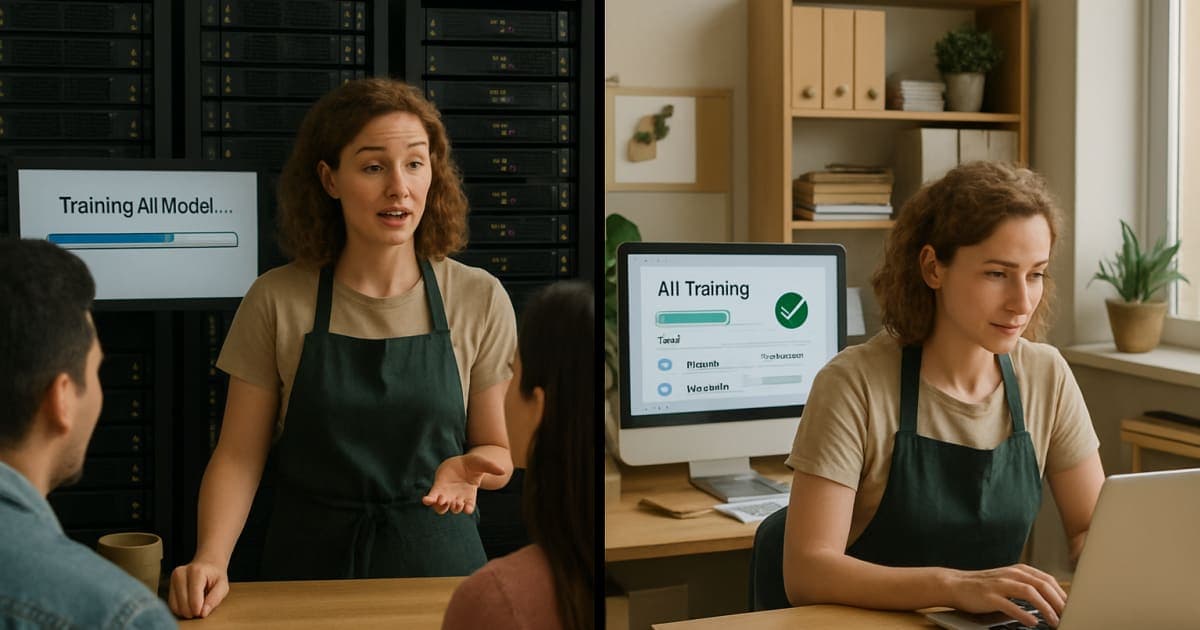
Time is the biggest bottleneck in AI development. While traditional machine learning projects can take months to train and deploy, modern AI training solutions are revolutionizing the industry by cutting development time by up to 70%. Discover the tools and strategies that leading companies use to accelerate their AI initiatives.
Small businesses are increasingly turning to autonomous technology to streamline operations, reduce costs, and stay competitive in today's fast-paced market. From automated customer service to intelligent inventory management, these technologies are no longer reserved for large corporations with massive budgets.
Understanding Autonomous Technology for Small Business
Autonomous technology refers to systems that can operate independently with minimal human intervention, using artificial intelligence and machine learning to make decisions and perform tasks. For small businesses, this means automating repetitive processes, improving accuracy, and freeing up valuable time to focus on growth and customer relationships. These technologies range from simple chatbots that handle customer inquiries to sophisticated inventory management systems that predict demand and automatically reorder supplies.
The beauty of modern autonomous technology lies in its accessibility and scalability. Unlike traditional enterprise solutions that required significant upfront investments, today's AI-powered tools can be implemented gradually and scaled according to your business needs. Our automation solutions are specifically designed to help small businesses harness this power without overwhelming their resources or budgets.
Key Benefits of Implementing Autonomous Systems
The most immediate benefit small businesses experience with autonomous technology is time savings. Tasks that previously consumed hours of manual work, such as data entry, appointment scheduling, and basic customer support, can now run automatically 24/7. This efficiency gain translates directly into cost savings, as employees can focus on higher-value activities that drive revenue and improve customer satisfaction.
Accuracy and consistency represent another major advantage of autonomous systems. Human error in data processing, order management, or customer communications can be costly and damage your reputation. Autonomous technology eliminates these inconsistencies while ensuring your business operations maintain the same high standard every time. According to McKinsey research, businesses implementing AI and automation see an average productivity increase of 20-25% within the first year.
Scalability becomes much more manageable with autonomous technology in place. As your business grows, these systems can handle increased workload without requiring proportional increases in staffing. This means you can serve more customers, process more orders, and manage more complex operations without the traditional growing pains that often plague expanding small businesses.
Common Applications Across Industries
Retail businesses are leveraging autonomous technology for inventory management, customer service, and personalized marketing campaigns. Smart inventory systems can track stock levels in real-time, predict when items will run low, and automatically place reorders with suppliers. Customer service chatbots handle routine inquiries, process returns, and even make product recommendations based on purchase history and browsing behavior.
Service-based businesses find tremendous value in autonomous scheduling and client management systems. These tools can handle appointment bookings, send automated reminders, process payments, and follow up with customers for feedback. Professional services firms use document automation to generate contracts, proposals, and reports, while marketing agencies deploy autonomous social media management and email marketing campaigns.
Manufacturing and logistics companies utilize autonomous technology for quality control, supply chain optimization, and predictive maintenance. Even small manufacturers can implement vision systems that detect defects, routing algorithms that optimize delivery routes, and maintenance systems that predict when equipment needs service before it breaks down. To see how businesses like yours have successfully implemented these technologies, explore our detailed success stories.
Implementation Strategies for Small Businesses
The key to successful autonomous technology implementation is starting small and building gradually. Begin by identifying the most time-consuming or error-prone processes in your business, then prioritize automation opportunities based on potential impact and implementation complexity. This approach allows you to see quick wins while building confidence and expertise with the technology.
Integration with existing systems is crucial for maximizing the value of your investment. Modern autonomous technology platforms are designed to work with popular business software like QuickBooks, Salesforce, and various e-commerce platforms. Understanding AI implementation best practices ensures smooth integration and helps you avoid common pitfalls that can delay or derail your automation projects.
Training and change management deserve careful attention during implementation. Your team needs to understand how autonomous systems will change their daily workflows and what new responsibilities they'll have. According to Gartner research, successful AI implementations involve comprehensive training programs and clear communication about how technology will enhance rather than replace human workers.
Cost Considerations and ROI
One of the biggest concerns small business owners have about autonomous technology is cost. However, modern solutions offer flexible pricing models that make them accessible to businesses of all sizes. Many platforms use subscription-based pricing that scales with usage, allowing you to start small and expand as you see results. Initial investments typically range from a few hundred to a few thousand dollars monthly, depending on the complexity and scope of automation.
Return on investment often becomes apparent within the first few months of implementation. Time savings alone can justify the cost, especially when you calculate the hourly value of tasks that become automated. For example, if autonomous systems save 10 hours per week of administrative work at $20 per hour, that's $10,400 in annual savings. Add improved accuracy, better customer satisfaction, and increased capacity for growth, and the ROI becomes compelling.
Hidden costs to consider include training time, integration complexity, and ongoing maintenance. However, reputable providers offer comprehensive support and training to minimize these expenses. For detailed information about implementation costs and potential savings for your specific situation, check our transparent pricing information and speak with our team about your unique requirements.
Security and Compliance Considerations
Data security is paramount when implementing autonomous technology, especially for small businesses that may not have dedicated IT security teams. Modern autonomous systems are built with enterprise-grade security features, including encryption, access controls, and audit trails. However, businesses must understand their responsibilities for data protection and ensure their chosen solutions comply with relevant regulations like GDPR, HIPAA, or industry-specific requirements.
Vendor selection plays a crucial role in maintaining security and compliance. Look for providers that offer transparent security practices, regular security audits, and compliance certifications relevant to your industry. They should provide clear documentation about data handling, storage locations, and backup procedures. Additionally, ensure they offer adequate support for incident response and have a track record of maintaining high security standards.
Regular monitoring and updates are essential for maintaining security as your autonomous systems evolve. This includes keeping software updated, reviewing access permissions, and monitoring system logs for unusual activity. According to Forrester research, businesses with robust AI governance frameworks experience 40% fewer security incidents compared to those without formal oversight processes.
Future Trends and Opportunities
The autonomous technology landscape is evolving rapidly, with new capabilities emerging that make these systems even more valuable for small businesses. Natural language processing improvements are making chatbots and virtual assistants more conversational and capable of handling complex customer interactions. Computer vision technology is becoming more affordable, opening opportunities for visual quality control and automated inspection in manufacturing and retail environments.
Edge computing is bringing autonomous capabilities closer to where data is generated, reducing latency and improving real-time decision-making. This trend is particularly relevant for retail businesses using smart cameras for inventory management or manufacturers implementing real-time quality control. Cloud-based platforms continue to democratize access to sophisticated AI capabilities that were previously only available to large enterprises.
Integration with Internet of Things (IoT) devices is creating new possibilities for autonomous operations. Smart sensors can monitor everything from equipment performance to environmental conditions, feeding data into autonomous systems that can make immediate adjustments or alert managers to potential issues. These connected ecosystems promise to make small businesses more responsive and efficient than ever before.
Frequently Asked Questions
How much does it cost to implement autonomous technology in a small business?
Implementation costs vary widely depending on the scope and complexity of automation, typically ranging from $500 to $5,000 monthly for small businesses. Many solutions offer scalable pricing models that grow with your usage and business needs. The key is starting with high-impact, low-complexity automations to demonstrate ROI before expanding to more sophisticated systems.
Will autonomous technology replace my employees?
Autonomous technology is designed to augment human capabilities rather than replace employees entirely. It handles repetitive, time-consuming tasks so your team can focus on strategic activities, customer relationships, and creative problem-solving. Most small businesses find that automation helps them serve more customers with the same team size while improving job satisfaction.
How long does it take to see results from autonomous technology implementation?
Most businesses begin seeing immediate time savings within the first few weeks of implementation. Measurable ROI typically becomes apparent within 3-6 months as systems are fully integrated and optimized. The timeline depends on the complexity of your chosen solutions and how well they integrate with existing business processes.
What happens if the autonomous system makes a mistake?
Modern autonomous systems include safeguards, monitoring capabilities, and human oversight protocols to minimize errors. When mistakes do occur, most systems provide audit trails and rollback capabilities to quickly correct issues. The error rates of well-designed autonomous systems are typically much lower than manual processes, and they learn from mistakes to improve over time.
Do I need technical expertise to manage autonomous technology?
Most modern autonomous technology platforms are designed for non-technical users with intuitive interfaces and comprehensive support resources. While some technical knowledge is helpful, many small business owners successfully manage these systems with basic computer skills and proper training. Reputable vendors provide ongoing support and training to ensure successful implementation and operation.
How do I choose the right autonomous technology solution for my business?
Start by identifying your biggest pain points and most time-consuming processes, then evaluate solutions based on ease of integration, scalability, and vendor support quality. Consider starting with proven solutions that address your most pressing needs rather than trying to automate everything at once. Schedule a consultation with our experts to discuss your specific requirements and get personalized recommendations.
Is my business data secure with autonomous technology platforms?
Reputable autonomous technology providers implement enterprise-grade security measures including encryption, access controls, and regular security audits. However, you should verify that any platform you choose complies with relevant regulations for your industry and provides transparent information about their security practices. Always review data handling policies and ensure backup and recovery procedures meet your business requirements.
Getting Started
Implementing autonomous technology doesn't have to be overwhelming or expensive for small businesses. The key is taking a strategic approach that focuses on your biggest pain points and builds momentum through early wins. Start by exploring our comprehensive automation solutions designed specifically for businesses like yours, or schedule a consultation to discuss your specific needs and develop a customized implementation roadmap. With the right approach and support, autonomous technology can transform your operations and position your business for sustainable growth in an increasingly competitive marketplace.
Brandon Hufstetler
Principal and CEO of Autonomous Retail Technology
Brandon Hufstetler is an AI strategist and executive dedicated to helping businesses connect technology, data, and strategy to achieve real growth in the modern business era. As the Principal and CEO of Autonomous Retail Technology, he leads initiatives that use AI to streamline operations, enhance decision-making, and scale business impact. With nearly 25 years of experience spanning startups, scaling ventures, and large enterprises, Brandon has built a reputation for bridging the gap between innovation and execution. His approach blends business acumen with deep technical insight, enabling organizations to embrace AI in ways that are both responsible and transformative. Before founding Autonomous Retail Technology, Brandon spent more than a decade in senior leadership roles overseeing digital transformation, business development, and enterprise analytics. He is passionate about empowering leaders to navigate the evolving AI landscape with confidence, creativity, and measurable outcomes.
Ready to Automate Your Business?
Let's discuss how automation can transform your operations.
Book a Free Consultation