AI Training Solutions: Scale Your Business Without the Hiring Headaches
Traditional scaling requires extensive hiring and training resources. Modern AI training solutions offer a revolutionary approach - enabling businesses to expand their capabilities through intelligent automation while maintaining lean teams and maximizing operational efficiency.
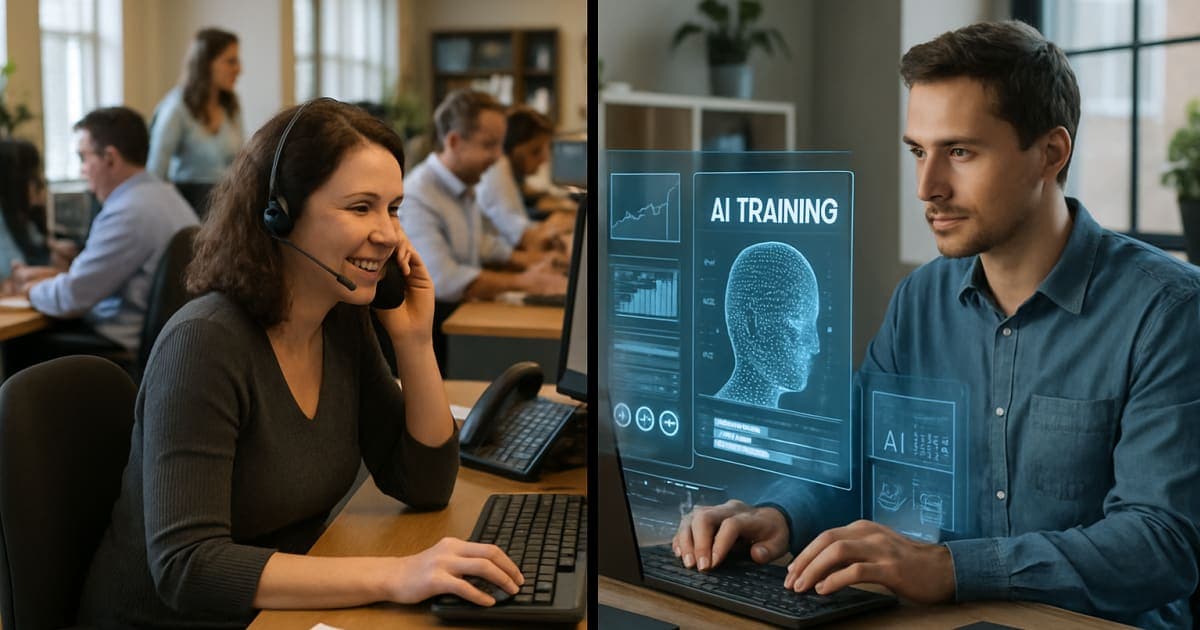
Small businesses today face an unprecedented opportunity to leverage artificial intelligence and automation to compete with larger enterprises. Understanding how autonomous technology can transform your operations is no longer optional—it's essential for survival and growth in the modern marketplace.
What Is Autonomous Technology and Why It Matters
Autonomous technology refers to systems that can perform tasks without human intervention, using artificial intelligence, machine learning, and advanced algorithms to make decisions and execute processes. For small businesses, this technology represents a game-changing opportunity to automate repetitive tasks, reduce operational costs, and improve customer experiences. The beauty of modern autonomous solutions lies in their accessibility—you don't need a massive IT department or huge budget to start benefiting from these innovations.
According to McKinsey research, businesses that adopt AI and automation see productivity gains of 20-25% within the first year of implementation. These improvements come from eliminating manual data entry, automating customer communications, streamlining inventory management, and optimizing scheduling processes. Small businesses particularly benefit because they can implement focused solutions that address their specific pain points without the complexity that larger organizations face.
Key Applications for Small Business Success
Customer service automation represents one of the most impactful applications of autonomous technology for small businesses. Chatbots and virtual assistants can handle routine inquiries 24/7, schedule appointments, and even process simple transactions while your team focuses on complex customer needs. These systems learn from each interaction, becoming more effective over time and providing consistent, professional responses that enhance your brand reputation.
Financial management and accounting automation can transform how small businesses handle their books, invoicing, and expense tracking. Modern systems can automatically categorize expenses, generate invoices based on completed work, reconcile bank statements, and even predict cash flow patterns. Marketing automation is another crucial area where small businesses can compete with larger competitors by nurturing leads, personalizing email campaigns, and tracking customer behavior across multiple touchpoints.
Operations management through autonomous technology includes inventory tracking, supply chain optimization, and predictive maintenance for equipment. These automation solutions help prevent stockouts, reduce waste, and minimize unexpected downtime that can devastate small business operations. The key is starting with one or two high-impact areas and expanding your autonomous technology footprint as you see results.
Implementation Strategies That Actually Work
Successful implementation of autonomous technology starts with identifying your biggest operational bottlenecks and repetitive tasks that consume valuable time. Begin by documenting your current processes, measuring the time spent on routine activities, and calculating the potential ROI of automation in each area. This baseline assessment helps you prioritize which systems to automate first and sets clear expectations for measuring success.
The most effective approach involves starting small with pilot projects that deliver quick wins and build confidence in autonomous technology. Choose processes that are well-defined, repetitive, and have clear success metrics—such as lead qualification, appointment scheduling, or basic customer support. Our AI implementation methodology focuses on these incremental improvements that compound over time rather than attempting massive transformations that often fail.
Integration with existing systems is crucial for seamless adoption, so look for solutions that work with your current CRM, accounting software, and communication tools. Forrester research shows that businesses with well-integrated autonomous systems see 40% faster implementation times and higher user adoption rates. Plan for proper training and change management to ensure your team embraces these new tools rather than resisting them.
Measuring ROI and Business Impact
Tracking the return on investment from autonomous technology requires establishing clear baseline metrics before implementation and monitoring specific KPIs that align with your business goals. Focus on measurable outcomes like time savings, error reduction, customer response times, and cost per transaction rather than vanity metrics that don't directly impact your bottom line. Most small businesses see positive ROI within 3-6 months when they implement autonomous technology strategically.
Time savings often represent the most significant value driver, as automated processes can complete tasks in minutes that previously took hours of manual work. Calculate the hourly value of your team's time and multiply by hours saved to understand the direct financial impact. Quality improvements through automation also deliver substantial value—fewer errors mean less time spent on corrections, improved customer satisfaction, and reduced operational stress.
Customer satisfaction metrics like response times, resolution rates, and Net Promoter Scores typically improve dramatically with well-implemented autonomous systems. Our success stories demonstrate how small businesses have reduced customer service response times by 75% while improving satisfaction scores and freeing up staff for higher-value activities. Document these improvements to justify expanding your autonomous technology investments and demonstrate clear business value to stakeholders.
Overcoming Common Implementation Challenges
Budget constraints represent the most common barrier small businesses face when considering autonomous technology, but modern solutions offer flexible pricing models and scalable implementations that fit smaller budgets. Start with cloud-based solutions that require minimal upfront investment and offer pay-as-you-grow pricing structures. Many businesses find that the time savings and efficiency gains from even basic automation quickly pay for more advanced features.
Technical complexity fears often prevent small business owners from exploring autonomous technology, but today's solutions are designed for non-technical users with intuitive interfaces and extensive support resources. Choose vendors that offer comprehensive onboarding, training, and ongoing support to ensure successful implementation. The learning curve for modern autonomous technology is much shorter than most business owners expect, especially when working with experienced implementation partners.
Change management challenges arise when team members worry about job security or resist new processes, making communication and training essential for success. Frame autonomous technology as a tool that eliminates tedious work and enables your team to focus on more strategic, creative, and customer-facing activities. Involve key team members in the selection and implementation process to build buy-in and ensure the solutions meet real operational needs.
Future-Proofing Your Small Business
The competitive landscape increasingly favors businesses that can operate efficiently, respond quickly to customer needs, and adapt to changing market conditions through autonomous technology. Small businesses that invest in automation now position themselves to compete more effectively against larger competitors while building scalable operations for future growth. The businesses that delay adoption risk being left behind as customer expectations continue to evolve toward faster, more personalized service.
Emerging trends in autonomous technology include more sophisticated AI capabilities, better integration between systems, and increasingly affordable solutions designed specifically for small businesses. Voice-activated assistants, predictive analytics, and advanced personalization tools are becoming accessible to smaller operations, creating new opportunities for competitive differentiation. Staying informed about these developments helps you plan future investments and maintain your competitive edge.
Building an automation-first culture within your organization ensures that you'll continue to identify and implement new opportunities for autonomous technology as your business grows. This mindset shift from manual processes to automated workflows becomes a sustainable competitive advantage that compounds over time. Companies that embrace this transformation early often become leaders in their markets, setting new standards for efficiency and customer service that competitors struggle to match.
Frequently Asked Questions
How much should a small business budget for autonomous technology implementation?
Small businesses typically invest $500-$5,000 monthly in autonomous technology solutions, depending on their size and automation needs. Most solutions offer scalable pricing that grows with your business, allowing you to start small and expand as you see results. The key is calculating ROI based on time savings and efficiency gains rather than viewing automation as a pure cost center.
What processes should small businesses automate first?
Start with repetitive, time-consuming tasks like appointment scheduling, email responses, data entry, and basic customer inquiries. These processes typically offer the fastest ROI and easiest implementation. Focus on areas where human error is costly or where 24/7 availability would significantly improve customer experience.
How long does it take to implement autonomous technology solutions?
Most small business automation projects can be implemented within 2-8 weeks, depending on complexity and integration requirements. Simple chatbots or email automation can be live within days, while more complex workflow automation may take several weeks. Working with experienced implementation partners significantly reduces timeline and ensures proper setup from the start.
Do I need technical expertise to manage autonomous technology systems?
Modern autonomous technology solutions are designed for business users without technical backgrounds, featuring drag-and-drop interfaces and pre-built templates. Most systems require minimal technical maintenance, with cloud-based solutions handling updates and security automatically. Basic training is usually sufficient to manage day-to-day operations and make simple modifications.
Will automation replace my employees or help them be more productive?
Autonomous technology typically enhances employee productivity rather than replacing workers, especially in small businesses where human relationships and expertise are crucial. Automation handles routine tasks, allowing your team to focus on customer service, strategic planning, and business development activities that drive growth. Most small businesses find they can serve more customers with the same team size after implementing automation.
How do I choose the right autonomous technology vendor for my business?
Look for vendors with proven experience serving small businesses in your industry, transparent pricing models, and comprehensive support offerings. Evaluate integration capabilities with your existing systems and request references from similar businesses. Check our pricing information to understand different investment levels and what features are included at each tier.
What security considerations should I be aware of with autonomous technology?
Choose solutions that offer enterprise-grade security features including data encryption, regular security updates, and compliance with industry standards. Ensure your autonomous technology vendors provide clear data handling policies and backup procedures. Most cloud-based automation platforms offer better security than small businesses can implement internally, with dedicated security teams and regular audits.
Getting Started
Ready to transform your small business with autonomous technology? The key to success is starting with a clear understanding of your current processes and identifying the highest-impact opportunities for automation. Gartner research shows that businesses with strategic automation plans achieve 3x better results than those who implement technology randomly. Our team specializes in helping small businesses develop and execute autonomous technology strategies that deliver measurable ROI within months, not years. Schedule a consultation today to discover how autonomous technology can streamline your operations, reduce costs, and accelerate your business growth while you focus on what you do best—serving your customers and growing your business.
Brandon Hufstetler
Principal and CEO of Autonomous Retail Technology
Brandon Hufstetler is an AI strategist and executive dedicated to helping businesses connect technology, data, and strategy to achieve real growth in the modern business era. As the Principal and CEO of Autonomous Retail Technology, he leads initiatives that use AI to streamline operations, enhance decision-making, and scale business impact. With nearly 25 years of experience spanning startups, scaling ventures, and large enterprises, Brandon has built a reputation for bridging the gap between innovation and execution. His approach blends business acumen with deep technical insight, enabling organizations to embrace AI in ways that are both responsible and transformative. Before founding Autonomous Retail Technology, Brandon spent more than a decade in senior leadership roles overseeing digital transformation, business development, and enterprise analytics. He is passionate about empowering leaders to navigate the evolving AI landscape with confidence, creativity, and measurable outcomes.
Ready to Automate Your Business?
Let's discuss how automation can transform your operations.
Book a Free Consultation