How Business Process Automation Transforms Customer Service: A Complete Guide
Customer service teams are drowning in repetitive tasks while customers wait longer for resolutions. Business process automation offers a lifeline, enabling companies to deliver faster, more consistent support while freeing agents to focus on complex issues that truly require human expertise.
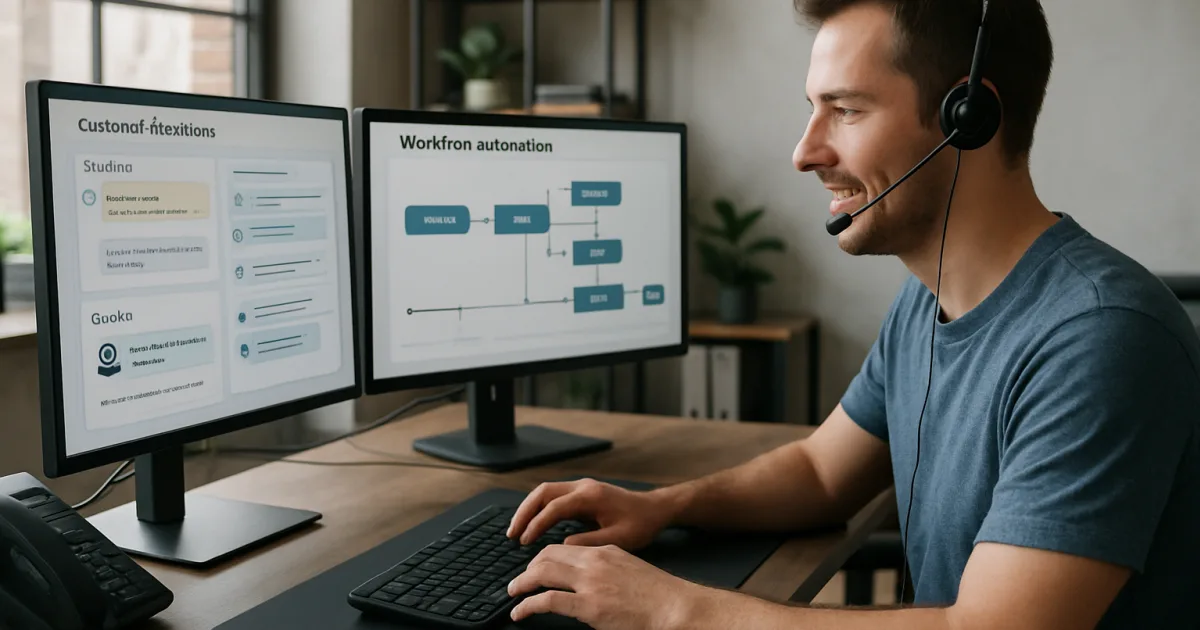
Small business owners face mounting pressure to automate routine tasks while staying competitive in an increasingly digital marketplace. Autonomous technology offers powerful solutions that can transform your operations, reduce costs, and free up valuable time to focus on growth and customer relationships.
Understanding Autonomous Technology for Small Business
Autonomous technology encompasses AI-powered systems that can perform tasks without human intervention, from customer service chatbots to inventory management and financial reporting. Unlike traditional software that requires constant manual input, these intelligent systems learn from data patterns and make decisions independently. For small businesses, this means you can automate repetitive processes that currently consume hours of your team's time each week. The technology has evolved from expensive enterprise-only solutions to accessible tools that even the smallest companies can implement and benefit from immediately.
The key advantage lies in scalability – as your business grows, autonomous systems adapt and handle increased workloads without requiring proportional increases in staff. According to McKinsey research, businesses that implement automation see average productivity gains of 20-25% within the first year. This translates to real cost savings and improved profit margins that can fuel further business expansion.
Key Benefits of Implementing Autonomous Solutions
Cost reduction represents the most immediate benefit most small businesses experience after implementing autonomous technology. Tasks like data entry, appointment scheduling, invoice processing, and basic customer inquiries can be handled automatically, reducing the need for additional administrative staff as you scale. Our success stories show businesses typically save 15-30 hours per week on routine operations within three months of implementation. These time savings allow business owners to focus on strategic planning, customer relationship building, and revenue-generating activities.
Improved accuracy and consistency form another critical advantage of autonomous systems. Human error in data processing, scheduling conflicts, or missed follow-ups can cost small businesses thousands of dollars annually in lost opportunities and customer dissatisfaction. Automated systems follow programmed protocols precisely every time, ensuring consistent quality in customer interactions and business processes. Additionally, autonomous technology provides 24/7 availability, allowing your business to capture leads, answer customer questions, and process orders even when your physical location is closed.
Common Autonomous Technology Applications
Customer service automation represents one of the most popular starting points for small businesses entering the autonomous technology space. AI-powered chatbots can handle up to 80% of routine customer inquiries, from checking order status to answering frequently asked questions about products or services. These systems integrate seamlessly with existing websites and social media platforms, providing instant responses that improve customer satisfaction while reducing phone call volume to your staff. Advanced chatbots can even schedule appointments, process returns, and escalate complex issues to human representatives when necessary.
Financial management automation streamlines accounting processes that traditionally require significant manual effort. Autonomous systems can categorize expenses, generate invoices, track payments, and even predict cash flow patterns based on historical data. Inventory management becomes more precise with automated reordering systems that monitor stock levels and supplier lead times to maintain optimal inventory without overstocking. Marketing automation tools can segment customer lists, send personalized email campaigns, and track conversion rates to optimize your promotional efforts continuously.
Choosing the Right Autonomous Technology for Your Business
Successful implementation starts with identifying your most time-consuming and repetitive business processes. Conduct an audit of daily operations to pinpoint tasks that follow predictable patterns and don't require creative problem-solving or complex human judgment. Common candidates include appointment scheduling, basic customer support, data entry, social media posting, and routine reporting. Prioritize processes that directly impact customer experience or consume significant staff time, as these will deliver the most noticeable benefits after automation.
Budget considerations should encompass both initial setup costs and ongoing operational expenses. Many autonomous technology providers offer scalable pricing models that grow with your business, making it easier to start small and expand coverage as you see results. Our pricing information outlines flexible options designed specifically for small business budgets. Consider the learning curve for your team and choose solutions with intuitive interfaces and comprehensive support resources to ensure smooth adoption across your organization.
Implementation Best Practices
Start with a pilot program focusing on one specific business process rather than attempting to automate everything simultaneously. This approach allows you to understand how AI implementation works in your unique business environment while minimizing disruption to daily operations. Choose a process that's clearly defined, frequently performed, and has measurable outcomes so you can track improvement accurately. Document current performance metrics before implementation to establish clear before-and-after comparisons that demonstrate return on investment.
Employee training and change management play crucial roles in successful autonomous technology adoption. Communicate clearly with your team about how automation will enhance their roles rather than replace them, emphasizing the opportunity to focus on more engaging and valuable tasks. Provide comprehensive training on new systems and establish clear protocols for when human intervention is needed. Harvard Business Review research indicates that businesses with strong change management practices are 67% more likely to achieve their automation goals successfully.
Measuring Success and ROI
Establish clear key performance indicators before implementing autonomous technology to track meaningful improvements in your business operations. Time savings, cost reduction, error rates, customer satisfaction scores, and revenue growth all serve as valuable metrics for measuring automation success. Track both quantitative data like processing times and call volumes, as well as qualitative feedback from customers and employees about their experience with automated systems. Regular monitoring helps identify opportunities for optimization and demonstrates the business value of your technology investment.
Calculate return on investment by comparing automation costs against the value of time savings, error reduction, and increased capacity for revenue-generating activities. Most small businesses see positive ROI within 6-12 months of implementing autonomous solutions, with benefits compounding over time as systems learn and improve. Document success stories and specific improvements to build a case for expanding automation to additional business processes. Gartner studies show that businesses measuring and optimizing their automation programs achieve 3x better results than those that don't track performance systematically.
Future-Proofing Your Business
The autonomous technology landscape continues evolving rapidly, with new capabilities and applications emerging regularly. Stay informed about industry developments and emerging tools that could benefit your specific business type through resources like our latest insights and industry publications. Build relationships with technology providers who offer regular updates and new feature releases to ensure your systems remain current and competitive. Consider the scalability of your chosen solutions and select platforms that can grow and adapt as your business expands into new markets or service areas.
Develop a long-term automation strategy that aligns with your business growth plans and customer expectations. As autonomous technology becomes more sophisticated, customer expectations for instant responses and seamless digital experiences will continue rising. Businesses that embrace automation early will have significant advantages over competitors still relying entirely on manual processes. Plan for gradual expansion of autonomous capabilities while maintaining the personal touch that makes small businesses special in their communities.
Frequently Asked Questions
How much does autonomous technology cost for small businesses?
Autonomous technology costs vary widely depending on the complexity and scope of implementation, typically ranging from $50-$500 per month for basic automation tools. Many providers offer scalable pricing that starts small and grows with your business needs. Most small businesses see positive ROI within 6-12 months through time savings and improved efficiency.
Will autonomous technology replace my employees?
Autonomous technology is designed to handle repetitive tasks, freeing your employees to focus on more valuable activities like customer relationship building and strategic planning. Rather than replacing workers, automation typically allows small businesses to grow without proportionally increasing administrative overhead. Most businesses find that automation enhances employee satisfaction by eliminating boring, repetitive work.
How long does it take to implement autonomous solutions?
Implementation timelines depend on the complexity of your chosen solutions, but most basic automation tools can be deployed within 1-4 weeks. Simple chatbots and scheduling systems often go live in just a few days, while more complex integrations with existing business systems may require several weeks. Starting with pilot programs allows you to see results quickly while building toward more comprehensive automation.
What if customers prefer talking to humans?
Well-designed autonomous systems always include options for customers to connect with human representatives when needed. The goal is to handle routine inquiries automatically while ensuring complex or sensitive issues receive personal attention. Most customers appreciate faster responses to simple questions and only want human interaction for complicated problems that require empathy or creative solutions.
Do I need technical expertise to use autonomous technology?
Modern autonomous technology platforms are designed for non-technical users with intuitive interfaces and comprehensive support resources. Most small business owners can set up and manage basic automation tools without programming knowledge. Professional automation solutions providers offer training and ongoing support to ensure successful implementation regardless of your technical background.
How do I know which processes to automate first?
Start by identifying repetitive tasks that follow predictable patterns and consume significant time each week. Common candidates include appointment scheduling, basic customer inquiries, invoice generation, and social media posting. Focus on processes that directly impact customer experience or prevent your team from working on revenue-generating activities for the greatest initial impact.
Is my data secure with autonomous technology systems?
Reputable autonomous technology providers implement enterprise-grade security measures including data encryption, secure cloud storage, and compliance with privacy regulations. Always verify that your chosen provider offers appropriate security certifications and clear data handling policies. Schedule a consultation to discuss specific security requirements for your business and industry.
Getting Started
Ready to transform your business operations with autonomous technology? The key to success lies in starting with clear goals and choosing the right partner to guide your automation journey. Our team specializes in helping small businesses identify the most impactful automation opportunities and implement solutions that deliver measurable results. Don't let manual processes hold back your growth potential – explore our comprehensive automation solutions designed specifically for small business success and take the first step toward operational excellence today.
Brandon Hufstetler
Principal and CEO of Autonomous Retail Technology
Brandon Hufstetler is an AI strategist and executive dedicated to helping businesses connect technology, data, and strategy to achieve real growth in the modern business era. As the Principal and CEO of Autonomous Retail Technology, he leads initiatives that use AI to streamline operations, enhance decision-making, and scale business impact. With nearly 25 years of experience spanning startups, scaling ventures, and large enterprises, Brandon has built a reputation for bridging the gap between innovation and execution. His approach blends business acumen with deep technical insight, enabling organizations to embrace AI in ways that are both responsible and transformative. Before founding Autonomous Retail Technology, Brandon spent more than a decade in senior leadership roles overseeing digital transformation, business development, and enterprise analytics. He is passionate about empowering leaders to navigate the evolving AI landscape with confidence, creativity, and measurable outcomes.
Ready to Automate Your Business?
Let's discuss how automation can transform your operations.
Book a Free Consultation