Sales Automation: How to Reclaim 40+ Hours Per Week and Accelerate Revenue Growth
Sales teams waste countless hours on repetitive tasks that could be automated. Learn how intelligent sales automation systems can free up your time for high-value activities while consistently nurturing leads and closing more deals on autopilot.
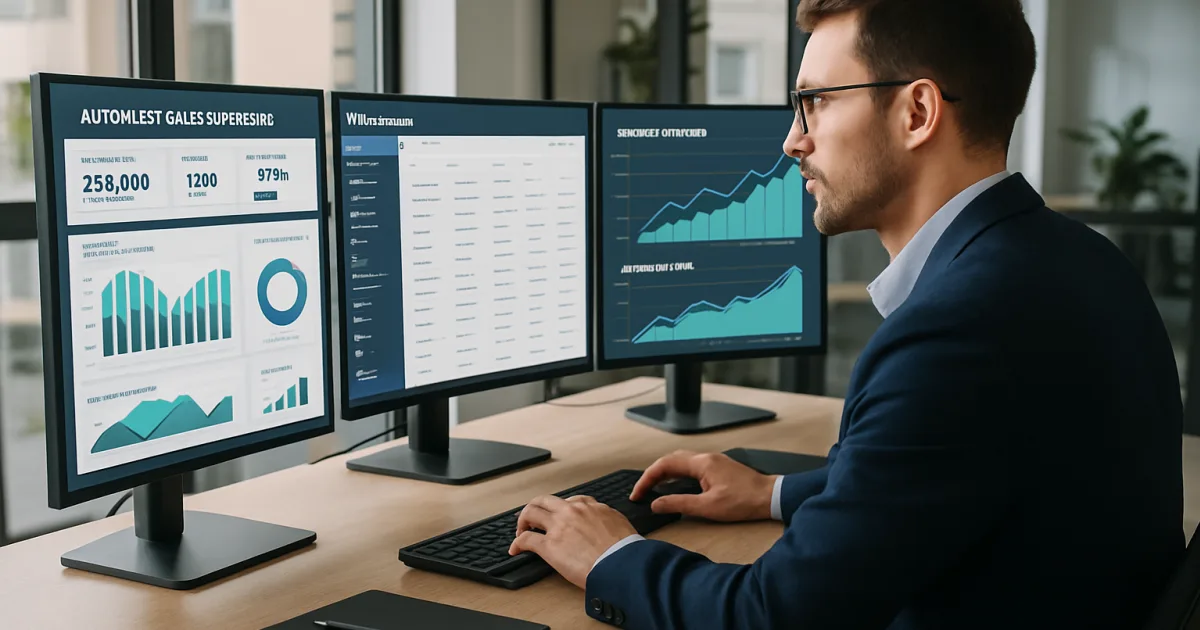
Artificial intelligence and automation technologies are transforming how businesses operate, offering unprecedented opportunities to streamline processes, reduce costs, and enhance customer experiences. Small and medium-sized businesses that embrace these technologies today position themselves for sustainable growth and competitive advantage in an increasingly digital marketplace.
Understanding Autonomous Technology in Modern Business
Autonomous technology refers to systems that can operate independently with minimal human intervention, using artificial intelligence, machine learning, and advanced algorithms to make decisions and execute tasks. These technologies have evolved from science fiction concepts to practical business tools that companies of all sizes can implement. The core components include intelligent automation software, predictive analytics platforms, and integrated systems that learn and adapt over time. Modern autonomous systems can handle everything from customer service inquiries to inventory management and financial forecasting.
The adoption of autonomous technology has accelerated dramatically in recent years, with businesses recognizing the need to stay competitive in a rapidly changing market. Companies that implement these solutions often see immediate improvements in efficiency, accuracy, and customer satisfaction. According to McKinsey research, businesses using AI and automation report productivity gains of 20-25% on average. The technology landscape now offers user-friendly solutions that don't require extensive technical expertise to implement and manage.
Key Benefits of Implementing Autonomous Solutions
The primary advantage of autonomous technology lies in its ability to handle repetitive tasks with consistent accuracy, freeing up human employees to focus on strategic, creative, and relationship-building activities. Businesses typically experience significant cost reductions through decreased labor expenses, reduced error rates, and improved operational efficiency. Customer service improvements are often immediate and measurable, with automated systems providing 24/7 support and faster response times. Data-driven decision making becomes more accessible as these systems continuously collect and analyze performance metrics.
Risk reduction represents another crucial benefit, as autonomous systems eliminate human error in critical processes and provide consistent compliance with industry regulations. Scalability becomes effortless when automated systems can handle increased workloads without proportional increases in staffing costs. Our success stories demonstrate how businesses across various industries have achieved remarkable results through strategic automation implementation. Companies also report improved employee satisfaction as team members transition from mundane tasks to more engaging, value-added responsibilities.
Common Applications Across Industries
Customer relationship management represents one of the most popular applications, with automated systems handling lead qualification, follow-up communications, and customer support inquiries. E-commerce businesses frequently implement autonomous inventory management systems that predict demand, automatically reorder stock, and optimize pricing strategies. Financial processes including invoicing, expense tracking, and reporting can be fully automated, reducing processing time from hours to minutes. Marketing automation enables personalized customer journeys, targeted campaigns, and detailed performance analytics without constant manual oversight.
Manufacturing and logistics companies utilize autonomous systems for quality control, supply chain optimization, and predictive maintenance scheduling. Healthcare practices implement automated appointment scheduling, patient communication, and billing processes to improve efficiency and reduce administrative burden. Professional services firms often deploy autonomous time tracking, project management, and client communication systems. The versatility of these automation solutions means that virtually every industry can find applications that directly address their specific operational challenges and growth objectives.
Implementation Strategies for Small Businesses
Successful implementation begins with identifying the most time-consuming or error-prone processes in your current operations, as these represent the highest-impact opportunities for automation. Start with a single process or department rather than attempting comprehensive transformation all at once, allowing your team to adapt gradually and learn the system thoroughly. Establish clear metrics for success before implementation, including time savings, error reduction rates, and customer satisfaction improvements. Employee training and change management are crucial components that determine whether automation initiatives succeed or fail.
Choosing the right technology partner can make the difference between smooth implementation and costly complications that disrupt business operations. Look for providers who offer comprehensive support, training programs, and scalable solutions that can grow with your business needs. Our AI implementation approach focuses on gradual integration that minimizes disruption while maximizing immediate benefits. Budget planning should account not only for initial setup costs but also ongoing maintenance, updates, and potential expansion of automated systems as your business grows.
Overcoming Common Implementation Challenges
Employee resistance often stems from fear of job displacement, making clear communication about how automation enhances rather than replaces human capabilities essential for success. Technical integration challenges can arise when connecting new automated systems with existing software and databases, requiring careful planning and potentially professional assistance. Data quality issues may surface during implementation, highlighting the need for clean, organized information before automation systems can function effectively. Budget constraints frequently limit implementation scope, making it important to prioritize high-impact processes and demonstrate return on investment quickly.
Change management strategies should include comprehensive training programs, regular feedback sessions, and clear communication about the benefits automation brings to individual roles and overall business success. Security concerns require careful attention to data protection, access controls, and compliance with industry regulations throughout the implementation process. Performance monitoring systems must be established to track results, identify areas for improvement, and ensure automated processes continue meeting business objectives. Working with experienced implementation partners can help navigate these challenges more effectively and reduce the risk of costly mistakes.
Measuring Success and ROI
Quantifiable metrics provide the clearest picture of automation success, including time savings per process, error reduction percentages, and customer response time improvements. Financial metrics should encompass both direct cost savings and revenue increases resulting from improved efficiency and customer satisfaction. Employee productivity measurements help demonstrate how automation enables team members to focus on higher-value activities that drive business growth. Customer satisfaction scores and retention rates often improve significantly following successful automation implementation.
Return on investment calculations should consider both immediate benefits and long-term value creation, including scalability advantages and competitive positioning improvements. Regular performance reviews help identify opportunities for optimization and expansion of automated systems to additional business processes. Forrester research indicates that companies typically see full ROI within 12-18 months of implementation when automation projects are properly planned and executed. Documentation of results provides valuable insights for future automation initiatives and helps justify continued investment in autonomous technologies.
Future Trends and Opportunities
Artificial intelligence capabilities continue advancing rapidly, with new applications emerging regularly that offer even greater automation potential for small and medium-sized businesses. Integration between different automated systems is becoming more seamless, creating opportunities for comprehensive business process automation that spans multiple departments and functions. Cloud-based solutions are making advanced automation technologies more accessible and affordable for smaller organizations that previously couldn't justify the investment. Voice recognition and natural language processing improvements are enabling more intuitive human-machine interactions.
Predictive analytics and machine learning algorithms are becoming more sophisticated, offering businesses unprecedented insights into customer behavior, market trends, and operational optimization opportunities. Industry-specific automation solutions are proliferating, providing tailored functionality that addresses unique challenges and requirements within particular sectors. The democratization of AI tools means that businesses no longer need extensive technical expertise to implement and benefit from advanced automation technologies. Companies that begin their automation journey now position themselves advantageously for future innovations and market opportunities.
Frequently Asked Questions
How much does it cost to implement autonomous technology in a small business?
Implementation costs vary significantly depending on the complexity and scope of automation, typically ranging from a few hundred to several thousand dollars monthly for small businesses. Many solutions offer tiered pricing models that allow you to start small and scale up as you see results. The return on investment usually becomes apparent within 6-12 months through reduced labor costs and improved efficiency. Our pricing information provides detailed breakdowns for different automation packages tailored to various business sizes and needs.
Will automation replace my employees?
Automation typically enhances rather than replaces human workers by handling repetitive tasks and allowing employees to focus on more strategic, creative, and customer-facing activities. Most businesses find that automation enables them to grow without proportionally increasing staff, rather than reducing their current workforce. Employees often report higher job satisfaction when freed from mundane tasks to work on more engaging and valuable projects.
How long does it take to implement autonomous technology solutions?
Implementation timelines depend on the complexity of your chosen solutions and the extent of integration required with existing systems. Simple automation tools can often be deployed within days or weeks, while comprehensive solutions may require 2-6 months for full implementation. Starting with pilot programs allows you to see immediate benefits while gradually expanding automation to additional processes. Proper planning and professional support can significantly accelerate the implementation timeline.
What technical expertise is required to manage automated systems?
Modern automation platforms are designed with user-friendly interfaces that require minimal technical expertise to operate and maintain. Most business owners and managers can learn to use these systems effectively with basic training and support from the technology provider. Advanced customizations may require professional assistance, but day-to-day operations are typically straightforward. Many providers offer ongoing support and training to ensure your team can maximize the benefits of automated systems.
How secure are autonomous technology solutions for business data?
Reputable automation providers implement enterprise-grade security measures including data encryption, secure access controls, and regular security audits to protect business information. Cloud-based solutions often provide better security than many small businesses could implement independently, with dedicated security teams and infrastructure. Always verify that potential providers comply with relevant industry regulations and data protection standards before implementation.
Can automation solutions integrate with my existing software systems?
Most modern automation platforms offer extensive integration capabilities with popular business software including CRM systems, accounting software, e-commerce platforms, and productivity tools. API connections and pre-built integrations make it possible to connect automated systems with your existing technology stack without major disruptions. Professional implementation services can help ensure smooth integration and data flow between all your business systems.
What happens if the automated system experiences problems or downtime?
Quality automation providers offer service level agreements that guarantee uptime percentages and provide rapid response times for technical issues. Most systems include backup procedures and fail-safes that maintain critical business operations even during temporary disruptions. Having a knowledgeable implementation partner ensures you have access to technical support and troubleshooting assistance when needed. It's important to maintain backup processes for critical functions during the initial implementation period.
Getting Started
Ready to transform your business with autonomous technology? The journey begins with understanding your specific needs and identifying the processes that would benefit most from automation. Our team of experts can help you develop a customized implementation strategy that aligns with your budget, timeline, and business objectives. Don't let your competitors gain an advantage while you're still handling everything manually – schedule a consultation today to discover how autonomous technology can drive your business forward. Take the first step toward greater efficiency, reduced costs, and improved customer satisfaction by exploring our comprehensive automation solutions designed specifically for growing businesses.
Brandon Hufstetler
Principal and CEO of Autonomous Retail Technology
Brandon Hufstetler is an AI strategist and executive dedicated to helping businesses connect technology, data, and strategy to achieve real growth in the modern business era. As the Principal and CEO of Autonomous Retail Technology, he leads initiatives that use AI to streamline operations, enhance decision-making, and scale business impact. With nearly 25 years of experience spanning startups, scaling ventures, and large enterprises, Brandon has built a reputation for bridging the gap between innovation and execution. His approach blends business acumen with deep technical insight, enabling organizations to embrace AI in ways that are both responsible and transformative. Before founding Autonomous Retail Technology, Brandon spent more than a decade in senior leadership roles overseeing digital transformation, business development, and enterprise analytics. He is passionate about empowering leaders to navigate the evolving AI landscape with confidence, creativity, and measurable outcomes.
Ready to Automate Your Business?
Let's discuss how automation can transform your operations.
Book a Free Consultation