Scale Your Customer Service Without Hiring: How Automated Solutions Drive Growth
Struggling to keep up with customer demands without expanding your team? Learn how automated customer service technologies can help you scale efficiently, reduce operational costs, and maintain exceptional customer experiences without the overhead of additional hires.
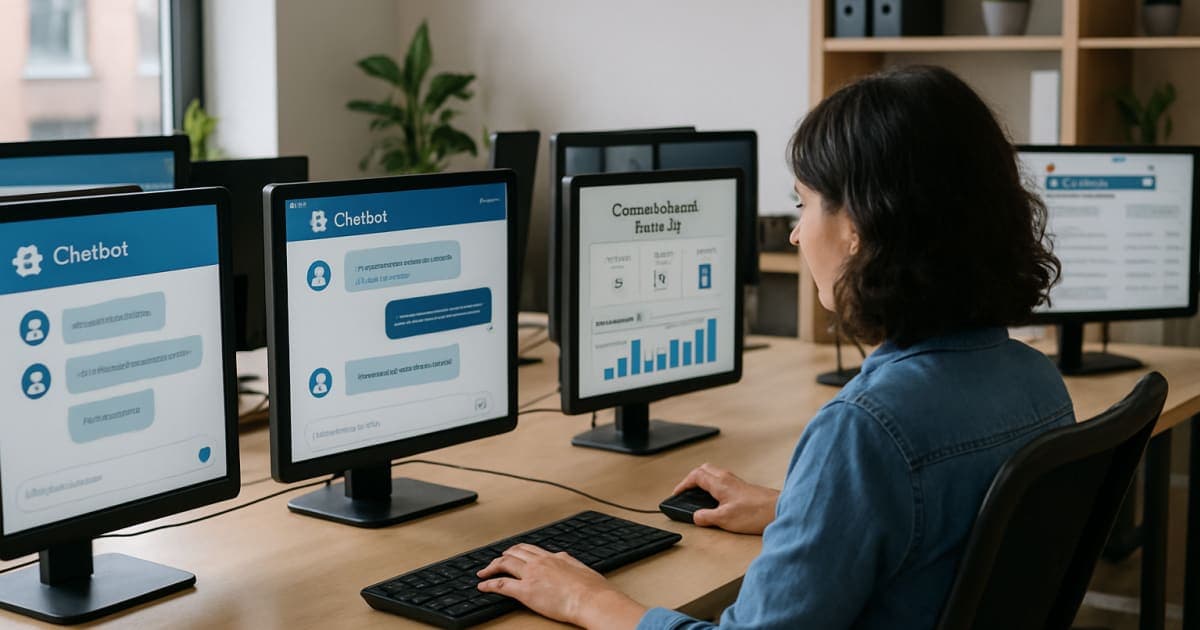
Artificial intelligence and automation are transforming how businesses operate, offering unprecedented opportunities to streamline processes, reduce costs, and enhance customer experiences. For small business owners, embracing autonomous technology isn't just about staying competitive—it's about unlocking growth potential that was previously accessible only to large enterprises.
Understanding Autonomous Technology for Business
Autonomous technology encompasses AI-driven systems that can perform complex tasks with minimal human intervention, from customer service chatbots to automated inventory management. These solutions leverage machine learning algorithms to continuously improve their performance, adapting to your business needs and customer behaviors over time. Unlike traditional software that requires constant manual updates, autonomous systems learn from data patterns to make intelligent decisions that benefit your bottom line. Small businesses are increasingly discovering that these technologies aren't just futuristic concepts but practical tools that can solve real operational challenges today.
The key advantage of autonomous technology lies in its ability to handle repetitive, time-consuming tasks that typically drain your team's productivity. Whether it's processing customer inquiries, managing social media responses, or analyzing sales data, these systems work around the clock without breaks or sick days. This constant availability means your business can provide better service while your human employees focus on strategic, creative, and relationship-building activities that drive growth.
Key Benefits of Automation for Small Businesses
Implementing automation delivers measurable improvements across multiple aspects of your business operations, starting with significant cost savings through reduced manual labor requirements. McKinsey research indicates that businesses can achieve productivity gains of 20-40% through strategic automation implementation. Your team can redirect their energy toward high-value activities like customer relationship building, product development, and strategic planning rather than getting bogged down in routine administrative tasks. These efficiency gains compound over time, creating a sustainable competitive advantage that grows with your business.
Customer satisfaction improves dramatically when automation handles routine inquiries and processes orders faster than humanly possible. Automated systems provide consistent, accurate responses 24/7, ensuring customers receive prompt attention regardless of when they engage with your business. This reliability builds trust and loyalty while freeing your staff to handle complex customer needs that require human insight and empathy. The result is a better overall customer experience that drives repeat business and positive referrals.
Common Automation Opportunities
Customer service automation represents one of the most impactful starting points for small businesses, with AI chatbots handling up to 80% of routine customer inquiries without human intervention. These systems can process orders, answer frequently asked questions, schedule appointments, and even handle basic troubleshooting, all while collecting valuable data about customer preferences and pain points. Email marketing automation nurtures leads through personalized sequences based on customer behavior, dramatically improving conversion rates compared to generic mass mailings. Social media scheduling and response automation ensures consistent brand presence across platforms without requiring daily manual attention.
Financial processes like invoicing, expense tracking, and payment reminders can be fully automated, reducing errors and improving cash flow management. Inventory management systems automatically reorder products when stock levels reach predetermined thresholds, preventing stockouts and overstock situations that hurt profitability. Our automation solutions are designed specifically for small businesses, offering scalable options that grow with your needs and budget constraints.
Implementation Strategies That Work
Successful automation implementation starts with identifying your most time-consuming, repetitive tasks and prioritizing them based on potential impact and implementation complexity. Begin with simple, high-impact processes like appointment scheduling or basic customer inquiries before moving to more complex workflows involving multiple systems and decision points. This phased approach allows your team to adapt gradually while building confidence in the technology's capabilities. Document your current processes thoroughly before automation to ensure the new systems replicate and improve upon existing workflows rather than creating confusion.
Training your team is crucial for successful adoption, as employees need to understand how to work alongside automated systems rather than feeling threatened by them. Emphasize how automation handles routine tasks so staff can focus on more engaging, strategic work that utilizes their unique human skills. Regular monitoring and adjustment ensure your automated systems continue performing optimally as your business evolves. Our detailed guide on AI implementation provides step-by-step instructions for smooth technology integration.
Measuring ROI and Success Metrics
Tracking the return on investment from automation requires establishing baseline metrics before implementation, including time spent on specific tasks, error rates, and customer satisfaction scores. Forrester research shows that businesses typically see ROI within 6-12 months of implementing automation solutions. Key performance indicators include reduced processing time, decreased error rates, improved customer response times, and increased employee productivity in strategic areas. Cost savings become evident through reduced overtime hours, fewer manual errors requiring correction, and the ability to handle increased business volume without proportional staff increases.
Customer satisfaction metrics often improve significantly with automation, as response times decrease and consistency increases across all interactions. Track metrics like first-call resolution rates, customer wait times, and satisfaction survey scores to quantify the customer experience improvements. Employee satisfaction surveys can reveal how automation affects job satisfaction by reducing repetitive work and allowing focus on more meaningful tasks. Our success stories showcase real businesses achieving measurable improvements through strategic automation implementation.
Overcoming Common Implementation Challenges
Resistance to change represents the most common obstacle when introducing automation, as employees may worry about job security or struggle with new technology adoption. Address these concerns proactively by clearly communicating how automation enhances rather than replaces human capabilities, creating new opportunities for growth and skill development. Provide comprehensive training and support during the transition period, ensuring everyone feels confident using the new systems. Celebrate early wins and share success stories to build momentum and enthusiasm for continued automation efforts.
Technical integration challenges often arise when connecting new automated systems with existing business software and databases. Choose automation solutions that offer robust integration capabilities with popular business tools like accounting software, CRM systems, and e-commerce platforms. Start with systems that require minimal integration complexity before tackling more sophisticated multi-system workflows. Budget constraints can be addressed by implementing automation in phases, starting with the highest-impact, lowest-cost opportunities and reinvesting savings into additional automation capabilities over time.
Future-Proofing Your Business with AI
The rapidly evolving landscape of AI technology means that businesses implementing automation today position themselves for continued innovation and competitive advantage tomorrow. Machine learning capabilities improve over time, making your automated systems more intelligent and effective without requiring manual programming updates. This self-improving nature of AI ensures your investment continues delivering increased value as the technology advances. Small businesses that embrace automation now will have established processes and expertise that enable them to quickly adopt new AI capabilities as they become available.
Preparing for the future means choosing scalable automation platforms that can grow with your business and integrate new features seamlessly. Consider the long-term implications of your technology choices, selecting vendors with strong development roadmaps and commitment to small business success. Our team stays current with the latest AI developments to ensure your automation solutions remain cutting-edge and competitive. Explore our pricing information to find the right automation package for your current needs and future growth plans.
Frequently Asked Questions
How much does it cost to implement automation in a small business?
Automation costs vary significantly based on your specific needs, but many small businesses start with solutions under $100 per month. Simple chatbots and email automation tools can cost as little as $20-50 monthly, while comprehensive business process automation may range from $200-1000 per month. Most businesses see positive ROI within 6-12 months through reduced labor costs and increased efficiency. The key is starting small with high-impact processes and scaling up as you see results.
Will automation replace my employees?
Automation typically enhances rather than replaces human workers by handling routine, repetitive tasks that free up staff for more strategic and creative work. Most small businesses find that automation allows them to grow without proportionally increasing staff, improving productivity rather than eliminating jobs. Employees often report higher job satisfaction when automation handles boring, repetitive tasks, allowing them to focus on customer relationships, problem-solving, and business development activities.
How long does it take to implement business automation?
Implementation timelines depend on complexity, but simple automation like chatbots or email sequences can be operational within days or weeks. More comprehensive systems involving multiple business processes may take 2-6 months for full implementation and optimization. The phased approach we recommend allows you to start seeing benefits from early implementations while more complex systems are being developed. Most businesses begin experiencing time savings and efficiency improvements within the first month of implementation.
What business processes should I automate first?
Start with high-volume, repetitive tasks that consume significant time, such as appointment scheduling, basic customer inquiries, or invoice generation. Email marketing automation and social media scheduling offer quick wins with immediate impact on customer engagement and time savings. Customer service chatbots for frequently asked questions provide 24/7 availability while reducing staff workload. Focus on processes where errors are costly or time-consuming to correct, as automation typically reduces mistakes significantly.
Do I need technical expertise to manage automated systems?
Modern automation platforms are designed for business users, not programmers, with intuitive drag-and-drop interfaces and pre-built templates for common business processes. Most systems require no coding knowledge and provide extensive documentation and support resources. Our consultation services include training and ongoing support to ensure your team feels confident managing the automated systems. While technical expertise isn't required, having a designated team member to oversee automation helps ensure optimal performance.
How do I ensure automation doesn't hurt the personal touch customers expect?
Smart automation design includes clear pathways for customers to reach human representatives when needed, ensuring complex or sensitive issues receive personal attention. Automated systems can be programmed with your brand voice and personalized responses based on customer history and preferences. The goal is using automation to handle routine tasks efficiently while preserving human interaction for relationship-building and complex problem-solving. Many customers actually prefer automated responses for simple inquiries because they receive immediate, accurate answers without waiting.
What happens if the automated system makes mistakes or stops working?
Professional automation platforms include monitoring systems that alert you to issues before they impact customers, along with fallback procedures that route requests to human staff when systems are unavailable. Regular testing and monitoring help identify potential problems early, and most platforms offer 99%+ uptime guarantees with technical support. Error rates typically decrease significantly compared to manual processes, and our team provides ongoing monitoring and maintenance to ensure your systems perform reliably. Having documented backup procedures ensures business continuity even during rare system outages.
Getting Started
Ready to transform your business operations with intelligent automation? The journey begins with understanding your unique needs and identifying the processes that will benefit most from automation technology. Our team specializes in helping small businesses implement cost-effective automation solutions that deliver measurable results from day one. Don't let manual processes continue limiting your growth potential when proven automation technologies can streamline operations and enhance customer satisfaction. Schedule a consultation today to discover how our automation solutions can revolutionize your business efficiency and profitability.
Brandon Hufstetler
Principal and CEO of Autonomous Retail Technology
Brandon Hufstetler is an AI strategist and executive dedicated to helping businesses connect technology, data, and strategy to achieve real growth in the modern business era. As the Principal and CEO of Autonomous Retail Technology, he leads initiatives that use AI to streamline operations, enhance decision-making, and scale business impact. With nearly 25 years of experience spanning startups, scaling ventures, and large enterprises, Brandon has built a reputation for bridging the gap between innovation and execution. His approach blends business acumen with deep technical insight, enabling organizations to embrace AI in ways that are both responsible and transformative. Before founding Autonomous Retail Technology, Brandon spent more than a decade in senior leadership roles overseeing digital transformation, business development, and enterprise analytics. He is passionate about empowering leaders to navigate the evolving AI landscape with confidence, creativity, and measurable outcomes.
Ready to Automate Your Business?
Let's discuss how automation can transform your operations.
Book a Free Consultation