7 Autonomous Technology Solutions to Boost Small Business Efficiency and Transform Customer Service
Small businesses struggle to balance operational efficiency with exceptional customer service. Discover how autonomous technology can solve both challenges simultaneously, helping you streamline operations while delivering the personalized customer experience that drives growth and loyalty.
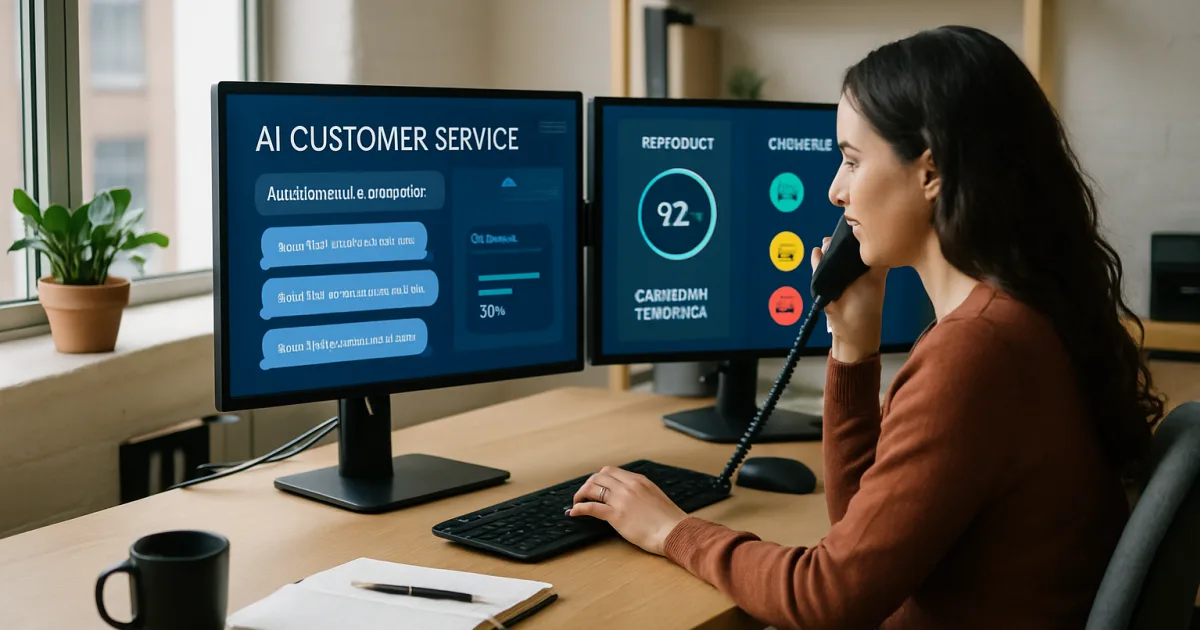
Autonomous technology is revolutionizing how small businesses operate, offering unprecedented opportunities to streamline operations, reduce costs, and compete with larger enterprises. By implementing AI-powered automation solutions, companies can eliminate repetitive tasks, improve accuracy, and focus their human resources on strategic growth initiatives.
Understanding Autonomous Technology for Business
Autonomous technology refers to systems that can operate independently with minimal human intervention, using artificial intelligence, machine learning, and advanced algorithms to make decisions and perform tasks. For small businesses, this technology represents a game-changing opportunity to level the playing field with larger competitors who have traditionally had access to more resources and workforce. These systems can handle everything from customer service inquiries to inventory management, financial reporting, and marketing campaigns without constant oversight.
The key advantage of autonomous technology lies in its ability to learn and adapt over time, becoming more efficient and accurate as it processes more data. Small businesses can start with simple automation tasks like email responses or appointment scheduling, then gradually expand to more complex operations as they become comfortable with the technology. This scalable approach makes it accessible for businesses of all sizes and technical expertise levels.
Key Benefits of Implementing Autonomous Systems
Cost reduction stands as the most immediate benefit small businesses experience when implementing autonomous technology, with many companies seeing operational cost savings of 20-40% within the first year. These systems work around the clock without breaks, sick days, or vacation time, providing consistent service delivery that human employees simply cannot match. Additionally, autonomous systems eliminate human error in routine tasks, leading to improved accuracy in data processing, customer communications, and financial transactions.
Scalability becomes significantly easier with autonomous technology, as businesses can handle increased workload without proportionally increasing their workforce. Our success stories demonstrate how small businesses have grown their customer base by 300% while maintaining the same staff levels through strategic automation implementation. The technology also provides valuable data insights, automatically generating reports and analytics that help business owners make informed decisions about growth opportunities and operational improvements.
Common Applications Across Industries
Customer service automation represents one of the most popular applications, with AI-powered chatbots handling up to 80% of routine customer inquiries without human intervention. These systems can process orders, answer frequently asked questions, schedule appointments, and even handle basic troubleshooting, freeing up human staff for more complex customer needs. According to Salesforce research, businesses using automated customer service see 25% higher customer satisfaction rates due to faster response times and 24/7 availability.
Financial management and accounting processes benefit tremendously from autonomous technology, with systems automatically categorizing expenses, generating invoices, processing payments, and preparing financial reports. Inventory management systems can automatically reorder products when stock levels reach predetermined thresholds, preventing stockouts while optimizing cash flow. Marketing automation platforms can segment customers, personalize communications, and track campaign performance, delivering targeted messages that convert at significantly higher rates than generic approaches.
Implementation Strategies for Small Businesses
Successful implementation begins with identifying repetitive, time-consuming tasks that don't require complex human judgment or creativity. Business owners should start by documenting their current processes, noting which activities consume the most time and resources while providing the least strategic value. Our AI implementation process helps businesses prioritize automation opportunities based on potential return on investment and ease of implementation.
The phased approach works best for small businesses, starting with one or two simple automation tasks before expanding to more complex systems. This allows staff to become comfortable with the technology while demonstrating clear value before making larger investments. Training and change management are crucial components, as employees need to understand how autonomous technology will enhance rather than replace their roles, shifting their focus to higher-value activities that require human creativity and problem-solving skills.
Measuring ROI and Performance
Return on investment for autonomous technology typically becomes evident within 3-6 months of implementation, with most small businesses seeing break-even points followed by significant ongoing savings. Key performance indicators include time savings per task, error reduction rates, customer response times, and employee productivity improvements in non-automated areas. McKinsey research indicates that businesses implementing autonomous technology see average productivity gains of 25-35% across automated processes.
Beyond direct cost savings, businesses should measure improvements in customer satisfaction scores, employee satisfaction, and overall business growth metrics. Many companies find that autonomous technology enables them to take on more clients or expand into new markets without proportionally increasing operational complexity. Our pricing models are designed to ensure positive ROI from day one, with transparent cost structures that allow businesses to accurately calculate their expected returns.
Overcoming Common Implementation Challenges
Data quality and integration challenges often arise when implementing autonomous systems, as these technologies require clean, consistent data to function effectively. Small businesses should audit their current data practices and invest in data cleaning and standardization before implementing automation solutions. Staff resistance to change represents another common hurdle, which can be addressed through clear communication about how automation will enhance rather than eliminate jobs, along with comprehensive training programs.
Technical complexity concerns can be mitigated by choosing user-friendly platforms and working with experienced implementation partners who understand small business needs. Budget constraints are often addressed through phased implementation approaches and flexible payment terms that align costs with realized benefits. Our team specializes in helping small businesses navigate these challenges, providing ongoing support and guidance throughout the implementation process.
Future Trends in Autonomous Technology
Artificial intelligence capabilities continue to advance rapidly, with new applications emerging regularly that make autonomous technology more accessible and powerful for small businesses. Voice-activated systems, predictive analytics, and advanced natural language processing are becoming standard features rather than premium add-ons. Gartner predicts that by 2027, autonomous systems will handle 40% of routine business tasks across all industries.
Integration capabilities are improving dramatically, allowing small businesses to create comprehensive automation ecosystems that connect marketing, sales, customer service, and operations into seamless workflows. Cloud-based solutions are making enterprise-level automation accessible to businesses of all sizes, while improved user interfaces are eliminating the need for technical expertise. These trends suggest that autonomous technology will become as essential for small businesses as websites and email are today.
Frequently Asked Questions
How much does autonomous technology implementation cost for small businesses?
Implementation costs vary widely depending on the scope and complexity of automation, typically ranging from $500 to $5,000 per month for small businesses. Most businesses see positive ROI within 3-6 months due to labor cost savings and efficiency improvements. Our flexible pricing models allow businesses to start small and scale up as they realize benefits from their initial automation investments.
Will autonomous technology replace my employees?
Autonomous technology is designed to handle repetitive, routine tasks so your employees can focus on higher-value activities that require human creativity, relationship building, and strategic thinking. Most businesses find that automation allows them to grow without adding proportional staff costs, while existing employees move into more fulfilling and strategic roles. The goal is to augment human capabilities rather than replace them entirely.
How long does it take to implement autonomous technology solutions?
Simple automation tasks like email responses or appointment scheduling can be implemented within 1-2 weeks, while more complex systems may take 4-8 weeks for full deployment. The timeline depends on the complexity of your current processes, data quality, and the scope of automation desired. We recommend a phased approach that delivers immediate value while building toward more comprehensive automation over time.
What if the autonomous system makes mistakes or breaks down?
Modern autonomous systems include built-in safeguards, error detection, and rollback capabilities to minimize risks and ensure business continuity. Most platforms offer 99.9% uptime guarantees with automatic failover systems and 24/7 monitoring. Our automation solutions include comprehensive support and monitoring to quickly address any issues that may arise, ensuring minimal disruption to your business operations.
Do I need technical expertise to manage autonomous technology?
Modern autonomous technology platforms are designed with user-friendly interfaces that require no coding or technical expertise to operate and manage. Most systems include drag-and-drop configuration tools, pre-built templates, and intuitive dashboards that business owners can easily navigate. Our team provides comprehensive training and ongoing support to ensure you're comfortable managing your automated systems independently.
Can autonomous technology integrate with my existing business software?
Most autonomous technology solutions offer extensive integration capabilities with popular business software including CRM systems, accounting platforms, email marketing tools, and e-commerce platforms. API connections and pre-built integrations make it possible to create seamless workflows between your existing tools and new automation systems. Our team conducts thorough compatibility assessments to ensure smooth integration with your current technology stack.
How do I know which processes to automate first?
The best candidates for initial automation are repetitive, time-consuming tasks that follow predictable patterns and don't require complex human judgment. Common starting points include email responses, appointment scheduling, data entry, invoice generation, and basic customer service inquiries. We provide detailed process assessments to help you identify the automation opportunities with the highest potential return on investment and easiest implementation path.
Getting Started
Ready to transform your business operations with autonomous technology? The journey begins with a comprehensive assessment of your current processes and identification of automation opportunities that will deliver immediate value. Our experienced team will work with you to develop a customized implementation strategy that fits your budget, timeline, and business goals. Don't let manual processes hold your business back when powerful automation solutions are readily available and affordable. Schedule a consultation today to discover how autonomous technology can revolutionize your operations and accelerate your growth trajectory.
Brandon Hufstetler
Principal and CEO of Autonomous Retail Technology
Brandon Hufstetler is an AI strategist and executive dedicated to helping businesses connect technology, data, and strategy to achieve real growth in the modern business era. As the Principal and CEO of Autonomous Retail Technology, he leads initiatives that use AI to streamline operations, enhance decision-making, and scale business impact. With nearly 25 years of experience spanning startups, scaling ventures, and large enterprises, Brandon has built a reputation for bridging the gap between innovation and execution. His approach blends business acumen with deep technical insight, enabling organizations to embrace AI in ways that are both responsible and transformative. Before founding Autonomous Retail Technology, Brandon spent more than a decade in senior leadership roles overseeing digital transformation, business development, and enterprise analytics. He is passionate about empowering leaders to navigate the evolving AI landscape with confidence, creativity, and measurable outcomes.
Ready to Automate Your Business?
Let's discuss how automation can transform your operations.
Book a Free Consultation