10 Autonomous Technology Solutions to Boost Small Business Efficiency and Save Time
Small business owners waste 40% of their day on repetitive tasks. Discover how autonomous technology can reclaim those lost hours and transform your business efficiency with proven automation solutions that work for any budget.
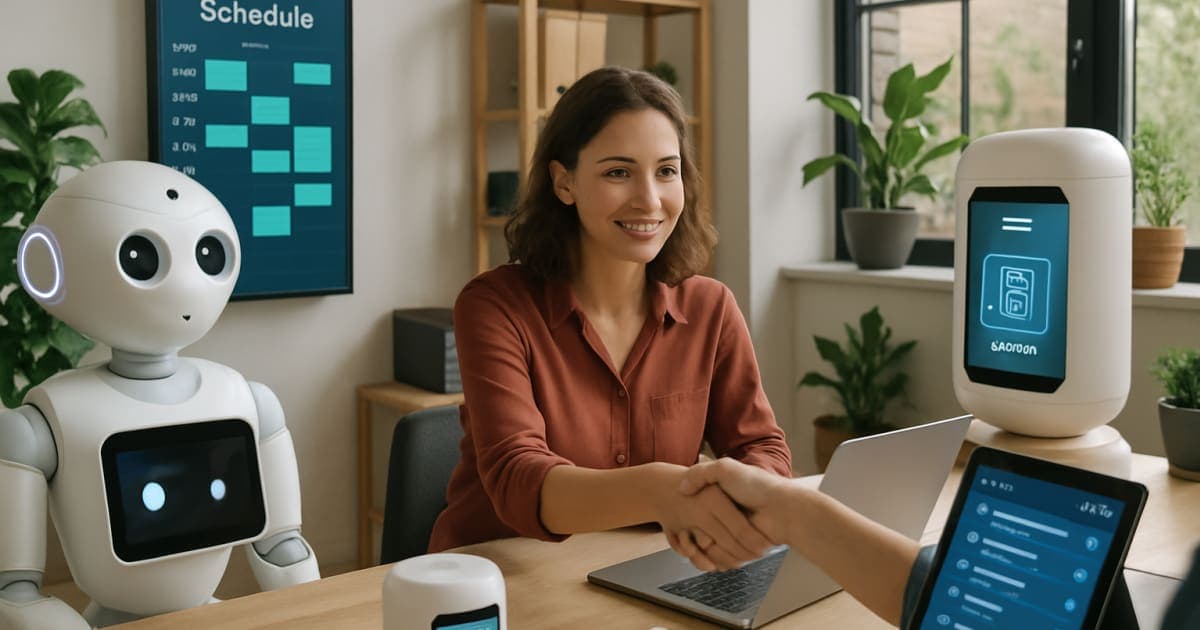
Autonomous technology is transforming how businesses operate, offering unprecedented opportunities for growth and efficiency. Small and medium businesses can now leverage artificial intelligence and automation to compete with industry giants while reducing operational costs and improving customer experiences.
Understanding Autonomous Technology in Business
Autonomous technology refers to systems that can operate independently with minimal human intervention, using artificial intelligence, machine learning, and advanced algorithms. These systems can make decisions, adapt to changing conditions, and execute tasks automatically across various business functions. For small businesses, this technology represents a game-changing opportunity to streamline operations and focus on strategic growth initiatives.
The applications of autonomous technology span across customer service chatbots, inventory management systems, financial processing, and marketing automation. Companies implementing these solutions report significant improvements in productivity, with McKinsey research showing that businesses can achieve 20-30% efficiency gains through intelligent automation. Our automation solutions are specifically designed to help small businesses harness this transformative potential.
Key Benefits for Small Business Operations
Cost reduction stands as the most immediate benefit of implementing autonomous technology in small business operations. Automated systems can handle routine tasks 24/7 without breaks, sick days, or overtime pay, allowing business owners to reallocate human resources to higher-value activities. Additionally, these systems significantly reduce human error rates, which can save thousands of dollars in corrections and rework.
Scalability becomes achievable for small businesses through autonomous technology, as these systems can handle increased workloads without proportional increases in staff or overhead costs. Customer satisfaction improves dramatically when autonomous systems provide instant responses, consistent service quality, and personalized experiences based on data analysis. To understand exactly how AI implementation can transform your specific business processes, consider scheduling a consultation to explore customized solutions.
Implementation Strategies for Maximum ROI
Successful implementation begins with identifying the most time-consuming and repetitive tasks in your business operations. Start small by automating one process at a time, allowing your team to adapt gradually while measuring results and refining approaches. This phased implementation reduces risks and provides clear metrics to demonstrate return on investment to stakeholders.
Integration with existing systems requires careful planning and often benefits from professional guidance to ensure seamless operation. Many small businesses see the fastest returns when they begin with customer-facing automation like chatbots or appointment scheduling systems, as these directly impact revenue generation. Our success stories showcase how businesses similar to yours have achieved remarkable results through strategic automation implementation.
Overcoming Common Implementation Challenges
Budget constraints often concern small business owners, but autonomous technology solutions have become increasingly affordable and accessible. Many platforms offer subscription-based pricing models that eliminate large upfront investments, making advanced automation available to businesses of all sizes. The key lies in selecting solutions that align with your specific needs and growth trajectory.
Employee resistance to change represents another common challenge that requires thoughtful change management strategies. Communicate clearly how automation will enhance rather than replace human roles, providing opportunities for skill development and career advancement. Training programs and gradual implementation help teams embrace new technologies while maintaining productivity. For detailed information about investment options and flexible payment plans, explore our pricing information to find solutions that fit your budget.
Future Trends and Opportunities
The autonomous technology landscape continues evolving rapidly, with emerging trends like conversational AI, predictive analytics, and autonomous decision-making systems becoming more sophisticated and accessible. Small businesses that adopt these technologies early position themselves for competitive advantages as markets become increasingly digital-first. Gartner predicts that autonomous technology will become mainstream in new product strategies for more than 25% of enterprises by 2025.
Integration capabilities are expanding to include Internet of Things devices, advanced analytics platforms, and cross-functional automation that spans entire business ecosystems. This evolution means that investments in autonomous technology today will continue providing value as systems become more interconnected and intelligent. Stay informed about the latest developments and implementation strategies by following our latest insights and industry analysis.
Measuring Success and Continuous Improvement
Establishing clear metrics before implementation ensures you can accurately measure the impact of autonomous technology on your business operations. Key performance indicators should include time savings, error reduction rates, customer satisfaction scores, and revenue growth attributable to automation initiatives. Regular monitoring and analysis help identify optimization opportunities and justify continued investment in technology upgrades.
Continuous improvement requires ongoing evaluation of system performance and adaptation to changing business needs and market conditions. Successful businesses treat autonomous technology implementation as an iterative process, regularly updating and expanding their automation capabilities based on results and new opportunities. Forrester research indicates that organizations with continuous improvement approaches achieve 40% better results from their automation investments.
Frequently Asked Questions
How much does autonomous technology implementation cost for small businesses?
Implementation costs vary widely depending on the scope and complexity of automation solutions, typically ranging from a few hundred to several thousand dollars monthly for small businesses. Many platforms offer subscription-based pricing that eliminates large upfront investments and provides predictable monthly expenses. Most small businesses see positive return on investment within 3-6 months of implementation.
Will autonomous technology replace my employees?
Autonomous technology is designed to augment human capabilities rather than replace workers, handling routine tasks so employees can focus on creative, strategic, and customer-facing activities. Most successful implementations result in job enhancement and new skill development opportunities for existing staff. The technology works best when combined with human oversight and decision-making.
How long does it take to implement autonomous technology solutions?
Implementation timelines depend on the complexity of your chosen solutions, typically ranging from a few days for simple automation to several weeks for comprehensive system integration. Most small businesses can begin seeing benefits from basic automation within the first week of deployment. Phased implementation approaches allow for gradual rollout while maintaining normal business operations.
What types of business processes can be automated?
Almost any repetitive, rule-based process can be automated, including customer service inquiries, appointment scheduling, invoice processing, inventory management, and social media posting. Data entry, email responses, report generation, and basic accounting tasks are particularly well-suited for automation. The best candidates are processes that follow consistent patterns and don't require complex human judgment.
Is my business data secure with autonomous technology systems?
Reputable autonomous technology providers implement enterprise-grade security measures including encryption, secure data centers, and compliance with industry standards like GDPR and SOC 2. Many automated systems actually improve data security by reducing human access to sensitive information and maintaining detailed audit trails. Always verify security certifications and data handling practices before selecting a provider.
Can autonomous technology integrate with my existing software systems?
Most modern autonomous technology solutions offer extensive integration capabilities with popular business software including CRM systems, accounting platforms, e-commerce tools, and productivity applications. API connections and pre-built integrations make it possible to connect automation tools with existing workflows seamlessly. Professional implementation services can help ensure smooth integration with legacy systems or custom software.
What support is available during and after implementation?
Comprehensive support typically includes initial setup assistance, staff training, ongoing technical support, and regular system optimization consultations. Many providers offer 24/7 technical support and dedicated account management for business customers. Our team provides continuous guidance to help you maximize your automation investment and adapt to changing business needs through our consultation services.
Getting Started
Autonomous technology offers transformative potential for small businesses ready to embrace the future of operations and customer service. The key to success lies in starting with clear objectives, choosing the right implementation partner, and maintaining a commitment to continuous improvement and adaptation. Don't let your competition gain the advantage – explore our comprehensive automation solutions today to discover how autonomous technology can drive your business growth and operational excellence.
Brandon Hufstetler
Principal and CEO of Autonomous Retail Technology
Brandon Hufstetler is an AI strategist and executive dedicated to helping businesses connect technology, data, and strategy to achieve real growth in the modern business era. As the Principal and CEO of Autonomous Retail Technology, he leads initiatives that use AI to streamline operations, enhance decision-making, and scale business impact. With nearly 25 years of experience spanning startups, scaling ventures, and large enterprises, Brandon has built a reputation for bridging the gap between innovation and execution. His approach blends business acumen with deep technical insight, enabling organizations to embrace AI in ways that are both responsible and transformative. Before founding Autonomous Retail Technology, Brandon spent more than a decade in senior leadership roles overseeing digital transformation, business development, and enterprise analytics. He is passionate about empowering leaders to navigate the evolving AI landscape with confidence, creativity, and measurable outcomes.
Ready to Automate Your Business?
Let's discuss how automation can transform your operations.
Book a Free Consultation