How Small Business Efficiency Can Transform Your Customer Service in 2024
Small businesses struggle with delivering consistent, fast customer service while managing limited resources. Learn how efficiency improvements through autonomous technology can transform your customer interactions, reduce response times, and create loyal customers without breaking your budget.
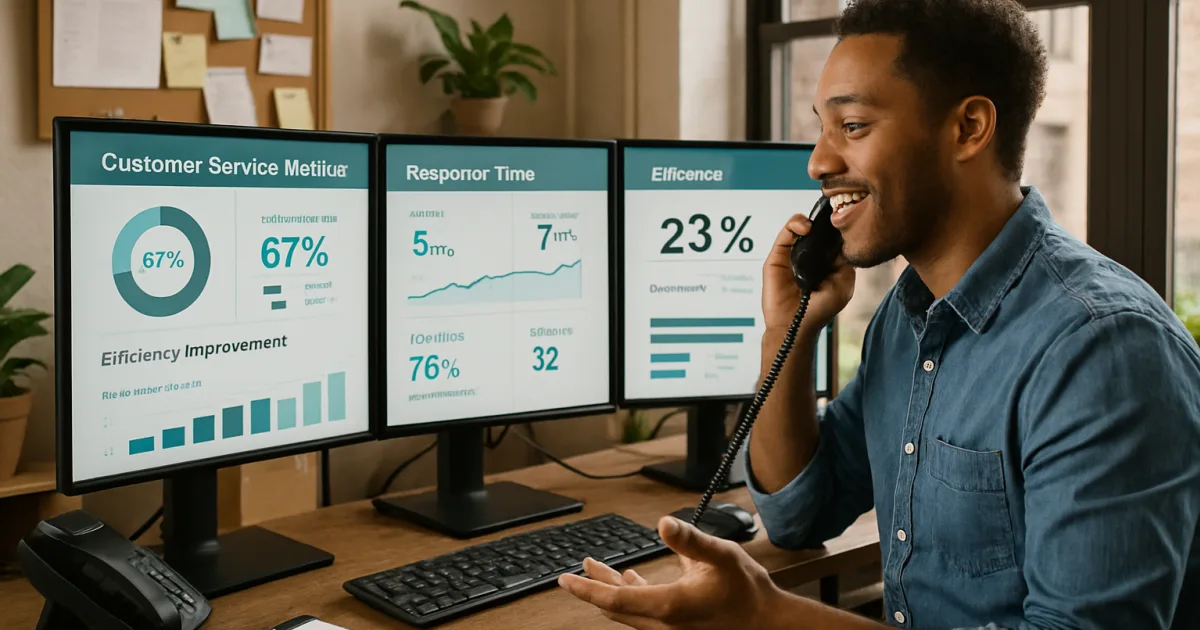
Small businesses today face an unprecedented opportunity to leverage autonomous technology and artificial intelligence to streamline operations, reduce costs, and compete with larger enterprises. The key is understanding which AI solutions deliver the fastest return on investment and how to implement them without overwhelming your existing processes.
Understanding Autonomous Technology for Small Business
Autonomous technology refers to systems that can operate independently with minimal human intervention, using artificial intelligence to make decisions and complete tasks. For small businesses, this means automating repetitive processes like customer service responses, inventory management, appointment scheduling, and data analysis. According to McKinsey research, businesses that adopt AI technologies see average productivity increases of 20-25% within the first year of implementation.
The beauty of modern AI solutions lies in their accessibility and ease of integration with existing business systems. Unlike complex enterprise software that requires months of training and implementation, today's autonomous tools are designed with user-friendly interfaces that small business owners can master quickly. These systems learn from your business patterns and continuously improve their performance, making them more valuable over time.
Key Applications That Drive Immediate Results
Customer service automation represents one of the most impactful applications of autonomous technology for small businesses. AI-powered chatbots and virtual assistants can handle up to 80% of routine customer inquiries, freeing your team to focus on complex issues and relationship building. Our automation solutions include customizable chatbots that integrate seamlessly with your website, social media platforms, and messaging apps.
Inventory management and demand forecasting become dramatically more accurate with AI systems that analyze historical sales data, seasonal trends, and market conditions. Small retail businesses using autonomous inventory systems typically reduce carrying costs by 15-30% while avoiding stockouts that cost sales. Financial management also benefits significantly, with AI tools that automate invoicing, expense categorization, and cash flow forecasting.
Marketing automation powered by AI can transform how small businesses attract and retain customers. These systems analyze customer behavior patterns to deliver personalized email campaigns, social media content, and product recommendations at optimal times. HubSpot research shows that businesses using AI-driven marketing automation see conversion rates improve by an average of 37%.
Implementation Strategy and Best Practices
Successful implementation of autonomous technology starts with identifying your highest-impact, lowest-risk opportunities for automation. Begin by mapping your current business processes and pinpointing tasks that are repetitive, time-consuming, and rule-based. These represent ideal candidates for automation because they provide clear metrics for measuring success and minimal risk if adjustments are needed.
The phased approach works best for small businesses with limited resources and time for extensive system overhauls. Start with one core process, master the technology, and then expand to additional areas once your team is comfortable. Our detailed guide on AI implementation provides step-by-step instructions for this gradual approach, ensuring smooth transitions without disrupting daily operations.
Training your team is crucial for long-term success with autonomous technology. Focus on helping employees understand how AI tools augment their capabilities rather than replace them. Most successful implementations involve designating one team member as the "AI champion" who becomes the go-to expert for questions and optimization opportunities.
Measuring ROI and Performance
Establishing clear metrics before implementing autonomous technology ensures you can accurately measure its impact on your business. Key performance indicators typically include time savings, cost reduction, error reduction, and customer satisfaction improvements. Gartner studies indicate that businesses tracking these metrics see 40% better results from their AI investments compared to those without formal measurement systems.
Most small businesses see measurable results within 30-60 days of implementing autonomous technology solutions. Initial improvements often appear in reduced response times, fewer manual errors, and increased capacity to handle customer demands. Our success stories showcase real businesses that achieved significant ROI within their first quarter of using AI automation.
Long-term ROI measurement should account for both direct cost savings and indirect benefits like improved employee satisfaction and customer retention. Many businesses discover that autonomous technology enables them to take on more clients or expand services without proportionally increasing their workforce, leading to improved profit margins and business scalability.
Overcoming Common Implementation Challenges
Data quality represents the most common challenge small businesses face when implementing autonomous technology. AI systems require clean, organized data to function effectively, but many small businesses have information scattered across multiple systems or stored in inconsistent formats. The solution involves dedicating time upfront to data organization and establishing ongoing data management practices that maintain system effectiveness.
Budget concerns often prevent small businesses from exploring autonomous technology, despite the significant ROI potential. Modern AI solutions offer flexible pricing models, including pay-per-use options and scalable subscription plans that align costs with business growth. Our transparent pricing information helps businesses understand the true cost of implementation and ongoing operations.
Resistance to change among team members can slow adoption and reduce the effectiveness of autonomous technology. Address this challenge through clear communication about how AI tools will enhance rather than replace human capabilities. Involve team members in the selection and customization process to increase buy-in and ensure the chosen solutions address real workflow pain points.
Future-Proofing Your Business with AI
The autonomous technology landscape evolves rapidly, with new capabilities and applications emerging regularly. Small businesses that establish a foundation with current AI tools position themselves to easily adopt advanced features as they become available. This evolutionary approach ensures you stay competitive without the disruption of completely replacing systems every few years.
Industry-specific AI solutions continue to mature, offering increasingly sophisticated capabilities tailored to particular business types. Whether you operate in retail, professional services, manufacturing, or hospitality, specialized autonomous tools can address your unique challenges and opportunities. Staying informed about developments in your industry helps identify new automation opportunities as they emerge.
Building relationships with AI solution providers who understand small business needs ensures ongoing support and guidance as your automation journey progresses. Look for providers who offer comprehensive training, responsive customer support, and regular updates that keep your systems current with the latest technological advances.
Frequently Asked Questions
How much does autonomous technology cost for a small business?
Autonomous technology solutions for small businesses typically range from $50 to $500 per month, depending on the complexity and scope of automation. Most businesses see positive ROI within 3-6 months due to time savings and efficiency gains. Many providers offer flexible pricing that scales with your business growth and usage levels.
Will AI replace my employees?
Autonomous technology is designed to augment human capabilities, not replace employees. AI handles repetitive, time-consuming tasks, freeing your team to focus on creative problem-solving, customer relationships, and strategic activities that drive business growth. Most small businesses using AI report higher employee satisfaction due to reduced mundane work.
How long does it take to implement AI solutions?
Basic AI implementations can be operational within 1-2 weeks for simple automations like chatbots or email marketing. More comprehensive systems involving multiple integrations typically require 4-8 weeks for full deployment. The key is starting with high-impact, low-complexity applications and expanding gradually.
Do I need technical expertise to use autonomous technology?
Modern AI solutions are designed for non-technical users with intuitive interfaces and guided setup processes. Most platforms provide comprehensive training resources, customer support, and implementation assistance. While having a tech-savvy team member helps, it's not required for successful adoption.
What types of business processes work best for automation?
Repetitive, rule-based processes with clear decision criteria work best for automation. Common examples include customer service inquiries, appointment scheduling, inventory management, invoice processing, and social media posting. Processes that require human creativity, complex problem-solving, or emotional intelligence are better handled by your team.
How secure is autonomous technology for small businesses?
Reputable AI solution providers implement enterprise-grade security measures including data encryption, secure access controls, and regular security audits. Many small businesses actually improve their security posture by using professional AI platforms compared to managing data in spreadsheets or basic software. Always verify that providers comply with relevant industry standards and regulations.
Can autonomous technology integrate with my existing software?
Most modern AI solutions offer integrations with popular small business software including accounting systems, CRM platforms, e-commerce sites, and communication tools. API connections and third-party integration platforms like Zapier make it possible to connect AI tools with virtually any software system. Our team at consultation services can help assess your specific integration needs.
Getting Started
The opportunity to transform your small business with autonomous technology has never been more accessible or affordable. Begin your AI journey by identifying one high-impact process that consumes significant time or resources in your daily operations. Our team of experts can help you evaluate your specific needs and recommend the most effective automation solutions for your business goals and budget. Contact us today to schedule a free consultation and discover how autonomous technology can drive growth, reduce costs, and give you the competitive edge you need to succeed in today's marketplace.
Brandon Hufstetler
Principal and CEO of Autonomous Retail Technology
Brandon Hufstetler is an AI strategist and executive dedicated to helping businesses connect technology, data, and strategy to achieve real growth in the modern business era. As the Principal and CEO of Autonomous Retail Technology, he leads initiatives that use AI to streamline operations, enhance decision-making, and scale business impact. With nearly 25 years of experience spanning startups, scaling ventures, and large enterprises, Brandon has built a reputation for bridging the gap between innovation and execution. His approach blends business acumen with deep technical insight, enabling organizations to embrace AI in ways that are both responsible and transformative. Before founding Autonomous Retail Technology, Brandon spent more than a decade in senior leadership roles overseeing digital transformation, business development, and enterprise analytics. He is passionate about empowering leaders to navigate the evolving AI landscape with confidence, creativity, and measurable outcomes.
Ready to Automate Your Business?
Let's discuss how automation can transform your operations.
Book a Free Consultation